

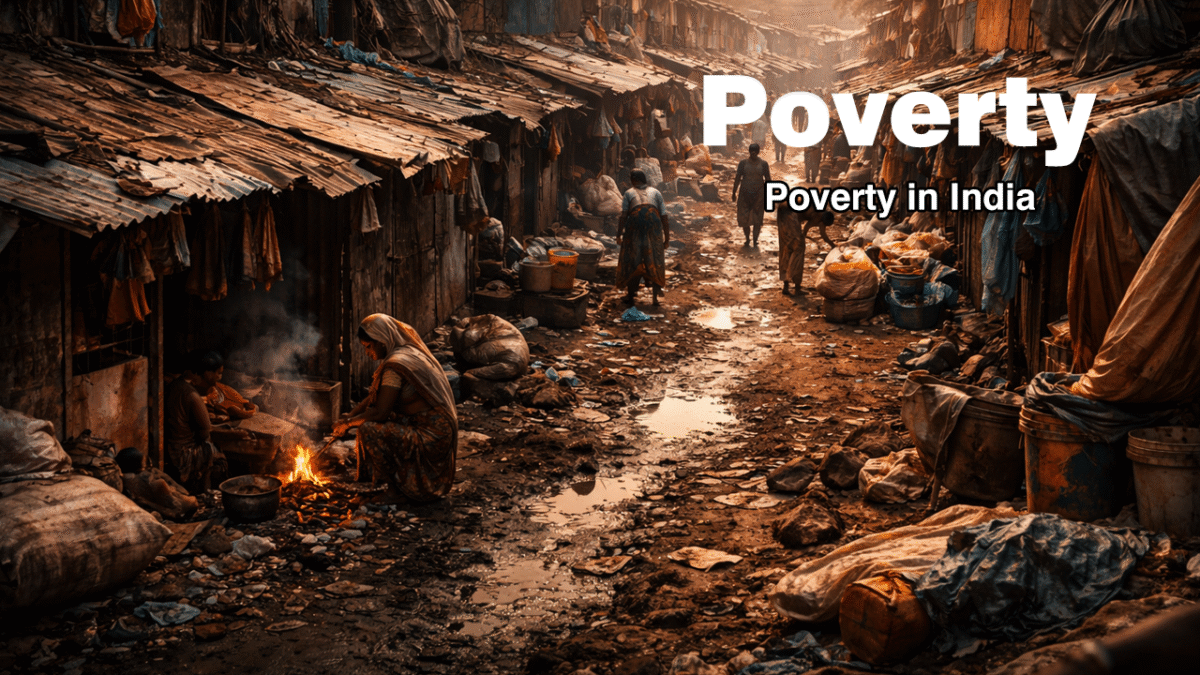
When people or communities don’t have enough resources to meet their fundamental needs—such as food, shelter, healthcare, education, and clean water—they are said to be in poverty.
Poverty Types
Total Deprivation
severe deficiency of survival needs
For instance, those who make less than $2.15 per day (the World Bank’s global benchmark)
Relative Poverty
When a country’s revenue is far below the average
causes social marginalization
https://designerchoicevja.blogspot.com
Causes of Poverty
Joblessness
Low pay
Insufficient education
Population expansion
Corruption and inadequate leadership
Climate change and natural disasters
Wars and conflict
Effects of Poverty
Poor health and malnutrition
Restricted educational opportunities
Higher rates of criminal activity
Unsatisfactory living circumstances
Inequality in society
Solutions to Reduce Poverty
Enhancing learning and skill building
generating employment opportunities
Government programs for welfare
Obtaining healthcare
Encouraging economic expansion
Women’s empowerment
Poverty in India
Despite the nation’s recent economic growth and development, poverty remains a major problem in India. These are some salient features of poverty in India
Scale of Poverty
There are a lot of impoverished individuals in India. According to the World Bank, as of 2016, approximately 20% of India’s population, or around 270 million people, lived below the national poverty line.
Multidimensional Poverty
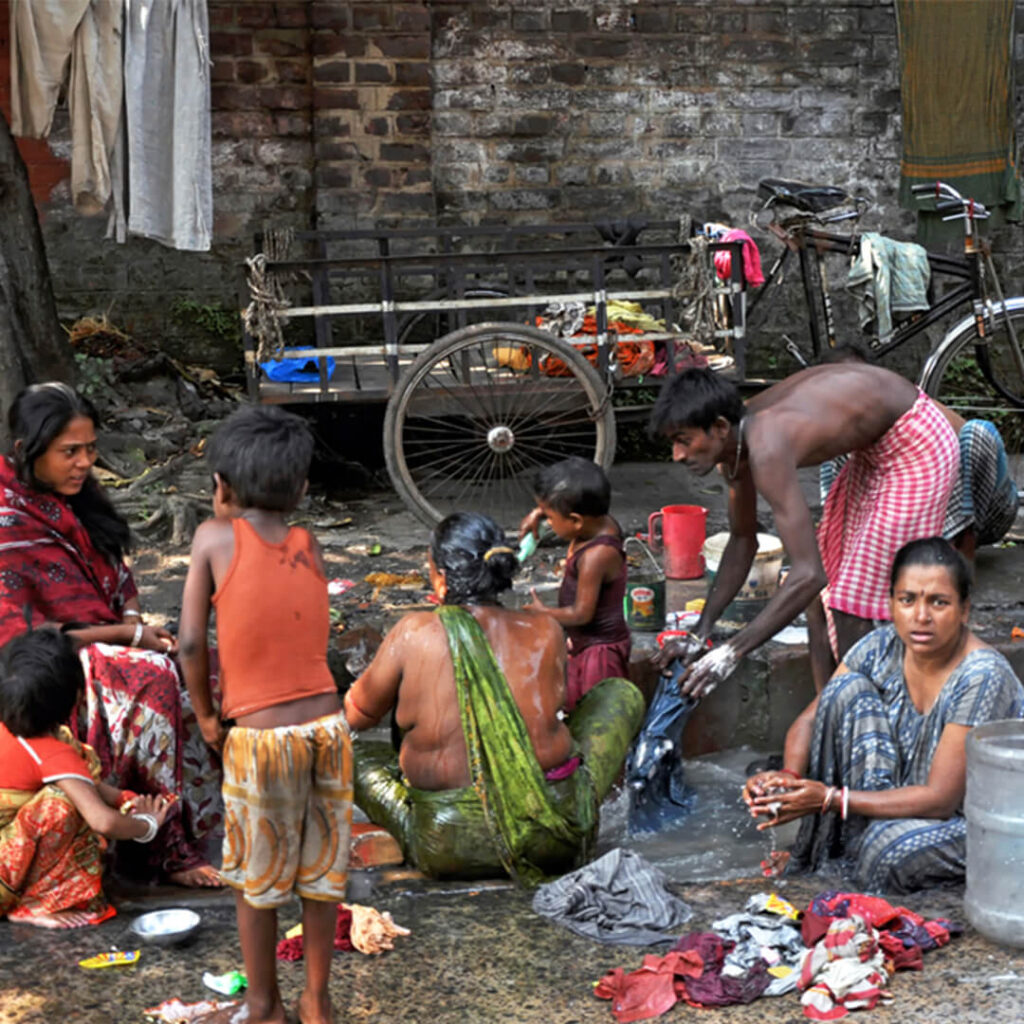
In India, poverty comprises more than just income levels; it also includes things like inadequate housing, potable water, sanitation, healthcare, and education.
Rural-Urban Divide
In India, poverty is more common in rural than in urban areas. Inadequate infrastructure, low agricultural output, and a lack of employment prospects are issues that many rural areas deal with.
Informal Economy
The informal sector, which comprises low-paying, unregulated jobs, employs a sizable section of the Indian labor force. Workers in the unorganized sector frequently lack access to conventional financial services, social security, and job security.
Malnutrition and Hunger
Hunger and malnutrition are still problems in India. India came in at number 94 out of 107 countries in the Global Hunger Index 2020.
Social Disparities
Scheduled castes, scheduled tribes, and religious minorities are among the marginalized and disadvantaged groups in India that are disproportionately affected by poverty. These groups frequently experience reduced social mobility, resource scarcity, and discrimination.
Government Initiatives
To address the issue, the Indian government has put in place a number of social welfare and poverty alleviation initiatives. The goal of initiatives like the Public Distribution System (PDS), the National Rural Livelihood Mission (NRLM), and the Mahatma Gandhi National Rural work Guarantee Act (MGNREGA) is to give those in need access to subsidized food, work opportunities, and livelihood support.
Education and Healthcare
Many of India’s poor still struggle to get access to high-quality healthcare and education. The poverty cycle is sustained by a lack of educational opportunities, while health disparities are made worse by a lack of access to healthcare.
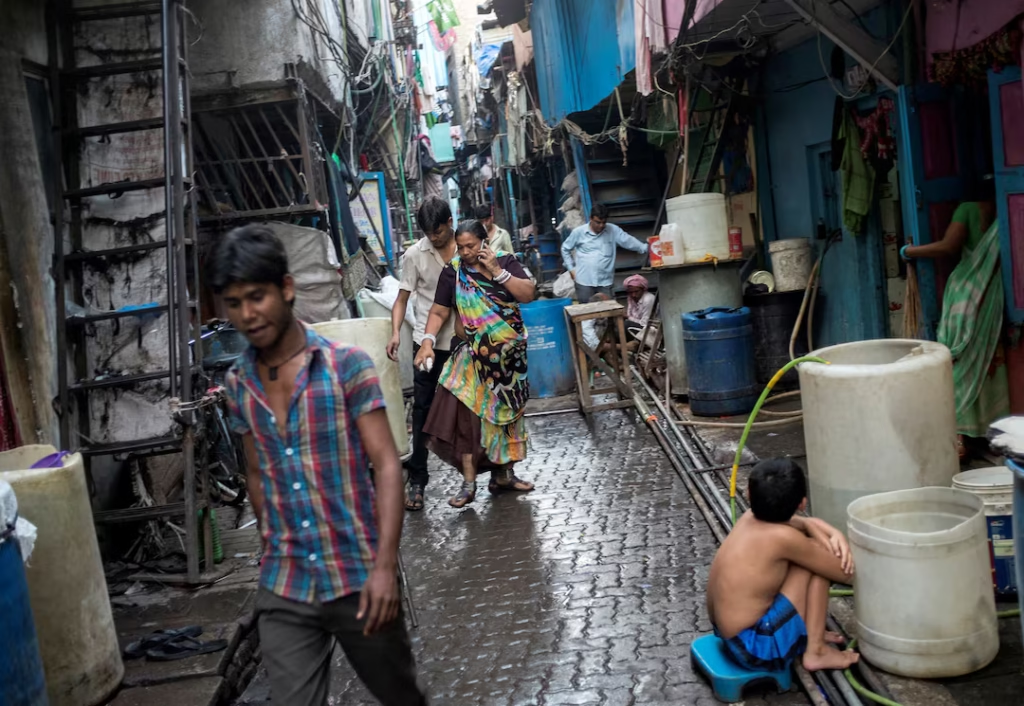
Urban Slums
Slums, where people live in poor housing conditions with little access to basic services, have grown in many Indian cities as a result of the country’s rapid urbanization. Slum inhabitants frequently deal with problems like lack of clean water, poor sanitation, and congestion.
Sustainable Development Goals
India has pledged to accomplish the Sustainable Development Goals (SDGs), one of which is to end poverty in all of its manifestations by 2030. The government is attempting to put policies in place to lessen poverty and enhance the welfare of its people in collaboration with civil society organizations and foreign partners.
It is crucial to remember that poverty in India is a complicated problem impacted by a number of variables. Comprehensive strategies addressing income inequality, access to essential services, social inclusion, and sustainable development are needed to reduce poverty.
Essential Knowledge
In India, poverty is evident in both rural and urban areas.
Large cities frequently have slums as a result of migration.
inadequate housing, inadequate sanitation, and low income are some of the conditions.
But over time, poverty is progressively declining.