

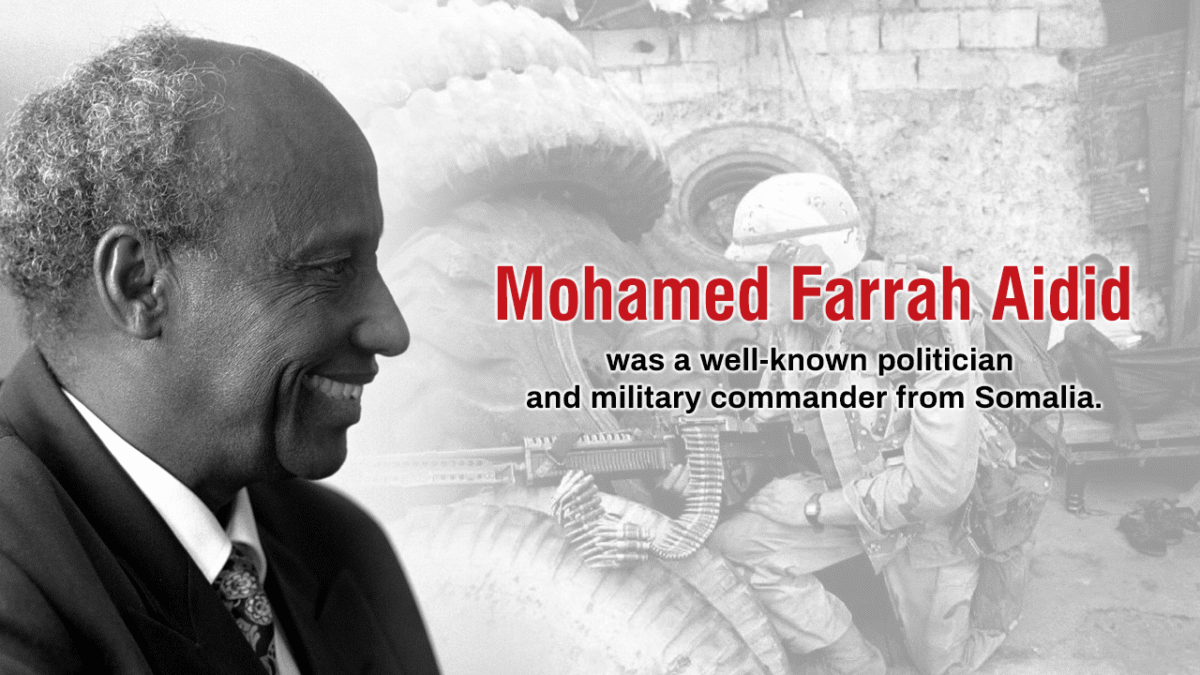
Mohamed Farrah Aidid (1934–1996) was a well-known politician and military commander from Somalia. He had a big impact on Somalia’s complicated late 20th-century political environment. Aidid became well-known in the 1980s as a leading member of the Somali National Movement (SNM), a rebel organization opposing President Siad Barre’s government.
https://designerchoicevja.blogspot.com
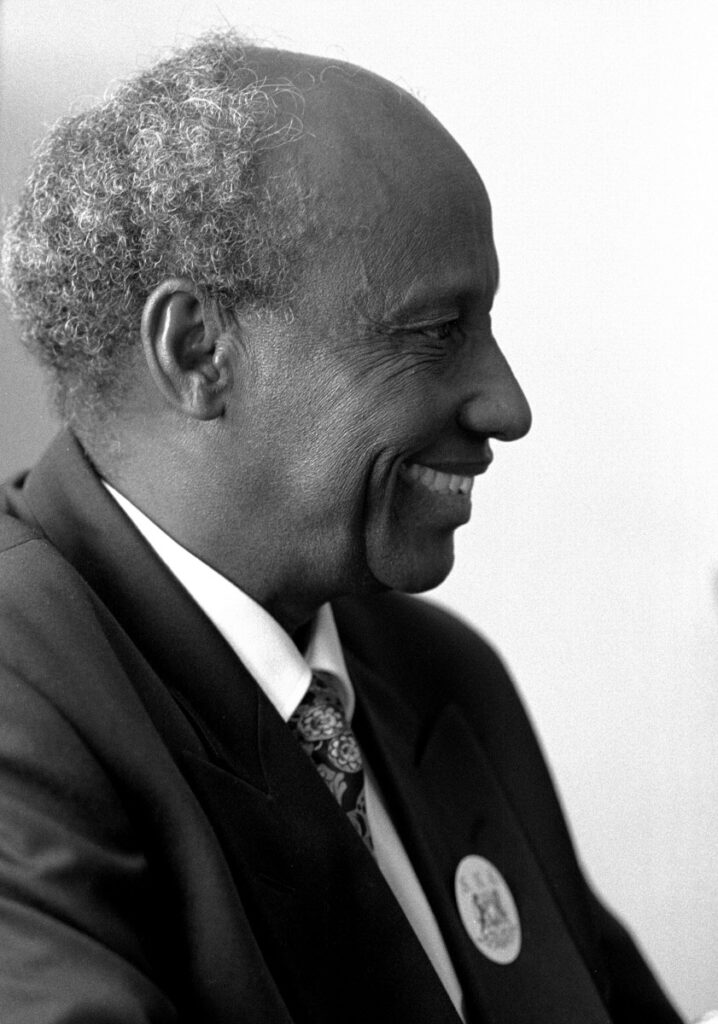
When Barre’s government fell in 1991 and Somalia fell into anarchy, Aidid’s power and influence grew in the early 1990s. A civil war sprang out as several groups and warlords fought for dominance. In the capital city of Mogadishu, Aidid became one of the strongest warlords.
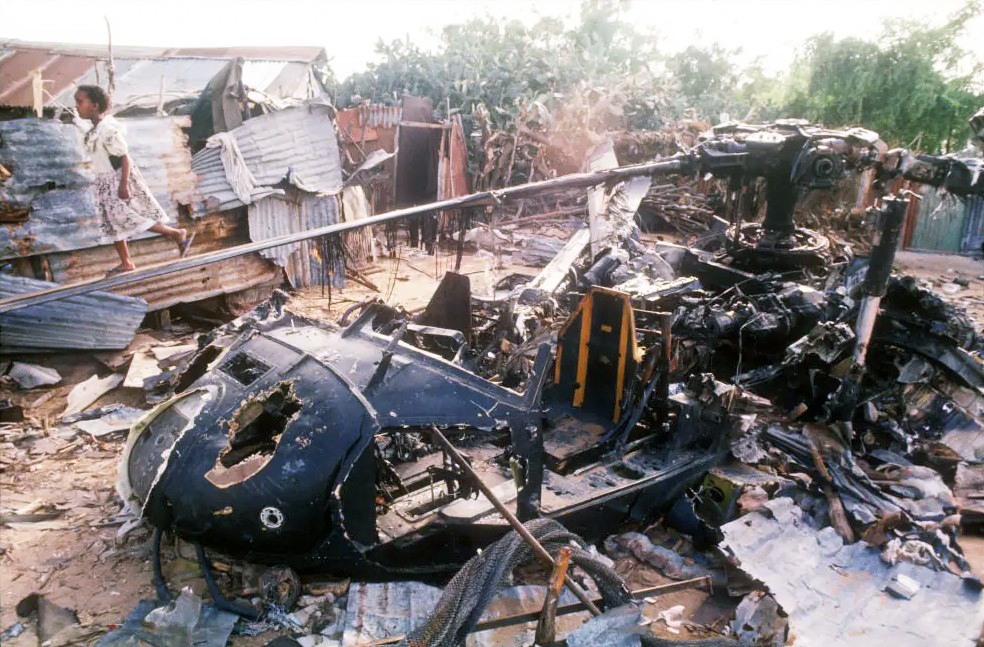
UNOSOM, a United Nations peacekeeping force, was sent to Somalia in 1992 with the goal of restoring order and delivering humanitarian supplies. However, there were a number of violent clashes between Mohamed Farrah Aidid‘s soldiers and the UN forces. The most prominent event was the October 3–4, 1993, Battle of Mogadishu, popularly referred to as the “Black Hawk Down” incident. Both sides suffered heavy casualties as a result of the intense gunfight between Aidid’s forces and Delta Force soldiers and U.S. Army Rangers.
As international pressure mounted on Aidid’s faction, the Battle of Mogadishu signaled a sea change in his power. A resolution to apprehend and prosecute Aidid for his involvement in impeding humanitarian efforts was passed by the UN Security Council in 1995.
But before going on trial, Mohamed Farrah Aidid passed away on August 1, 1996. After having a heart attack in Mogadishu, he was sent to a Saudi Arabian hospital for treatment, where he eventually died. Hussein Mohamed Aidid, Aidid’s son, succeeded his father as the faction’s head following his passing.
A prominent character in Somali history, Mohamed Farrah Aidid is best known for his participation in the country’s civil war and his opposition to the UN’s presence there.
Rise to Power
Born in 1934 in Beledweyne, Somalia, Aidid is a member of the Hawiye tribe. He first worked for President Siad Barre’s administration as a police officer, but political and clan-based conflicts caused him to turn against Barre.
Aidid rose to prominence as a leader of the Somali National Movement (SNM), a rebel organization mainly made up of Isaaq clan members in northern Somalia. The SNM sought to topple the Barre government and give the Isaaq people their own sovereign state.
USC formation
Aidid established the United Somali Congress (USC), a political and military group, following the fall of Barre’s administration in 1991. The USC sought to unify different clans under a single banner and close the power gap in Somalia. However, internal strife and factionalism at USC caused more unrest.
Control of Mogadishu
In 1991, Mohamed Farrah Aidid’s group took control of Somalia’s capital, Mogadishu. He asserted his power over other groups and set up a de facto government in the city. But his reign was marked by ineffective governance and violence.
Humanitarian Crisis and UN Conflicts
The United Nations sent peacekeeping troops to Somalia in the early 1990s while the country was experiencing a serious humanitarian crisis. The Battle of Mogadishu in 1993 was the result of fighting between Aidid’s forces and UN forces. American soldiers lost their lives in the tragedy, which also brought attention to the situation in Somalia on a global scale.
Diplomatic Efforts and International Pressure
Aidid faced increasing international pressure, including sanctions and attempts to capture him, as a result of his attacks on UN forces and obstruction of humanitarian aid.
Death and Aftermath
Mohamed Farrah Aidid died of a heart attack on August 1, 1996. Factional conflict persisted in Somalia after his passing, and his son Hussein Mohamed Aidid took on a leadership position within their group. With numerous warlords and factions fighting for control, the situation in Somalia remained chaotic.
Following the death of Mohamed Farrah Aidid, Somalia continued to experience significant instability, characterized by ongoing factional conflict and the emergence of new power struggles as various warlords vied for dominance. His son, Hussein Mohamed Aidid, assumed a leadership role, yet the absence of effective governance perpetuated the humanitarian crisis and violence throughout the region.