
Anne Frank

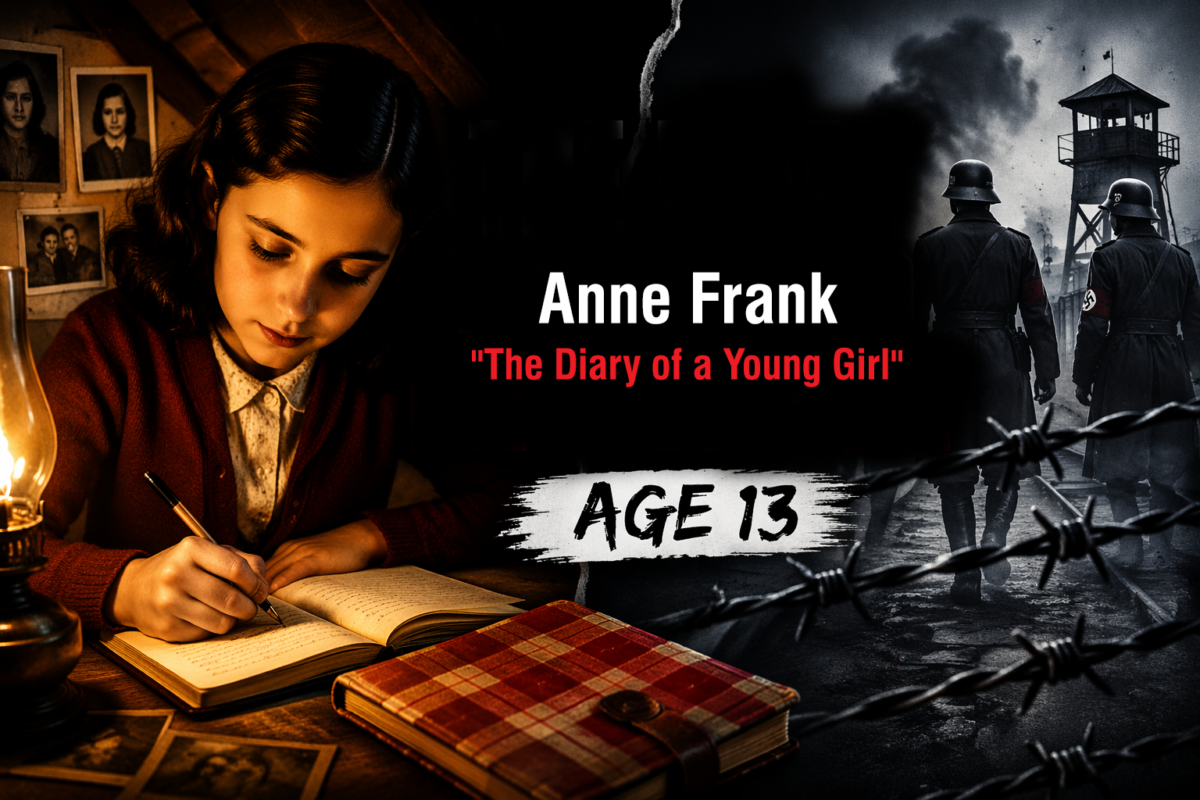
One of the most well-known Holocaust victims was a Jewish girl named Anne Frank. Her family relocated to Amsterdam to avoid Nazi persecution after she was born in Frankfurt, Germany, on June 12, 1929. When Anne was only 13 years old in 1942, her family fled to a hidden annex above her father’s workplace to avoid being taken prisoner by the Nazis.

Anne kept a journal in which she documented her thoughts, feelings, and experiences during their more than two-year period of hiding. Known as “The Diary of a Young Girl” or just “Anne Frank: The Diary of a Young Girl,” her journal became a potent and extensively read narrative of the Holocaust and the resistance of the human spirit to persecution. In addition to discussing the difficulties of life in concealment and the escalating hostilities within the annex, Anne wrote openly about her aspirations, concerns, and hopes.

When the Nazis tragically found the annex in August 1944, Anne and her family were detained and taken to concentration camps. After being moved to the Bergen-Belsen detention camp, Anne and her sister Margot perished from typhus in early 1945, just before the camp was liberated by Allied forces.

Miep Gies, one of the Dutch civilians who had assisted in hiding the family, gave Anne’s diary to Otto Frank, the only surviving member of the family, when he returned to Amsterdam following the war. Otto Frank pushed for the publication of his daughter’s diary, which has since been translated into many languages and turned into plays, movies, and other media.

One of the most read and significant accounts of the Holocaust is still Anne Frank’s diary, which offers a moving and intimate look into the life of a little child enmeshed in one of the worst eras in human history. Her words, which convey optimism, resiliency, and the enduring strength of the human spirit, continue to uplift readers everywhere.

https://designerchoicevja.blogspot.com/

“The Diary of Anne Frank”

The book “The Diary of Anne Frank,” sometimes referred to as “Anne Frank: The Diary of a Young Girl,” is written by Anne Frank, a Jewish girl who survived through the Holocaust. The journal documents Anne’s thoughts and experiences during World War II while she and her family were hiding in Amsterdam from the Nazis.
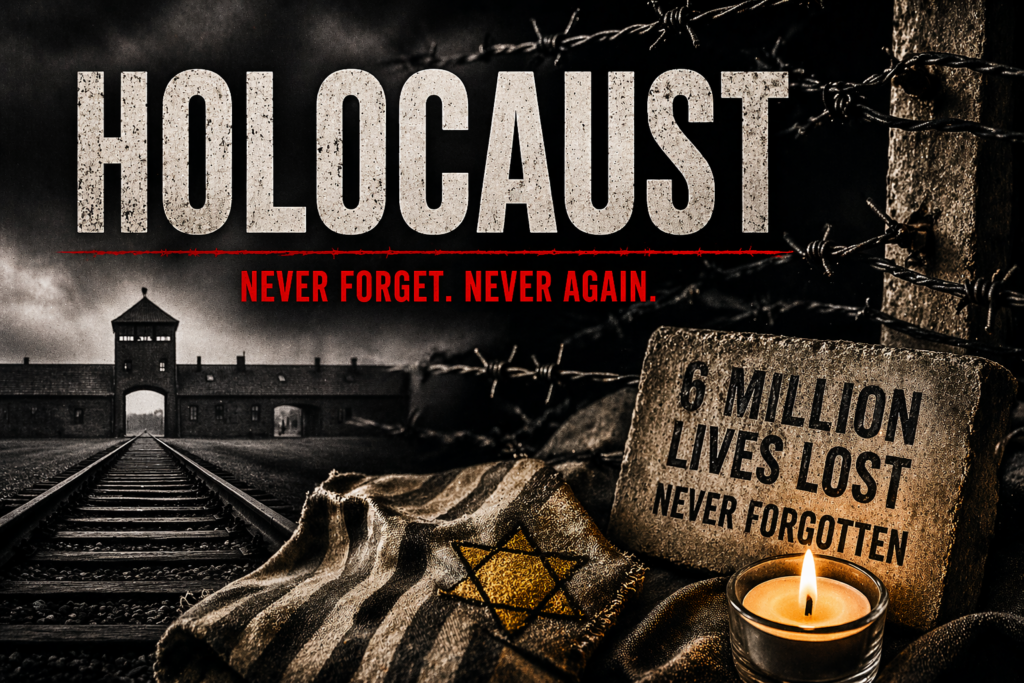
Holocaust

Content

The journal spans more than two years, from June 12, 1942, to August 1, 1944. In a hidden annex above her father’s office building, Anne, her family, and four other individuals lived in hiding throughout this period. Anne wrote openly about her day-to-day activities, her interactions with the other residents of the annex, her aspirations, and her thoughts on the conflict and the persecution of Jews.

Style of Writing

Writing in a vibrant and captivating way, Anne addressed her journal entries to a fictional acquaintance called “Kitty.” She put her all into her writing, sharing her frustrations, anxieties, and goals with incredible candor and wisdom.

Themes

“The Diary of Anne Frank” addresses a number of topics, such as the horrors of persecution and war, the human spirit’s tenacity, the value of optimism and hope, and the common challenges of puberty. A firsthand description of the Holocaust and its effects on people and families may also be found in Anne’s diary.

Publication

Otto Frank, Anne’s father and the only survivor of the family . It was initially published in Dutch in 1947 under the title “Het Achterhuis” (“The Secret Annex”) thanks to his efforts to get it published. Since then, it has been translated into many languages, making it one of the most read books worldwide.

Effect

Globally, “The Diary of Anne Frank” has had a significant influence on readers. It has received recognition for its timeless message of bravery, optimism, and tolerance as well as its moving depiction of the human condition. Anne’s story has been further disseminated and future generations have been motivated to remember the lessons of the Holocaust by the diary’s adaptations into plays, movies, and other media.

Reminding readers of the horrors of the Holocaust and the significance of speaking out against injustice and persecution, “The Diary of Anne Frank” is still a potent and significant literary work.
https://rapidknowledge.in/


Black Hawk Down

Based on a true story, Ridley Scott’s compelling military movie Black Hawk Down was released in 2001.

What is it about?

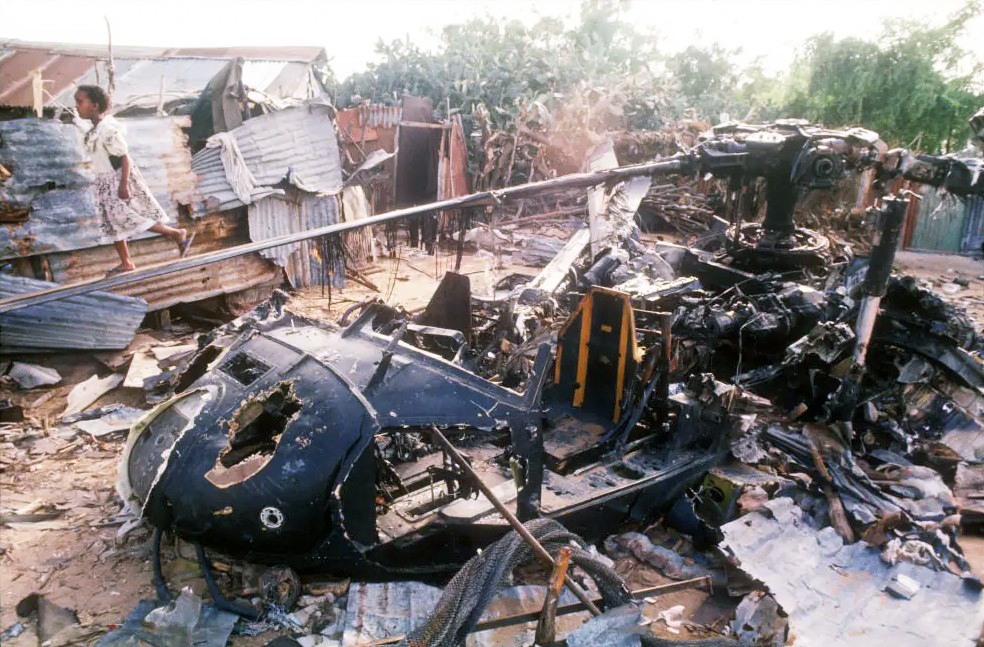
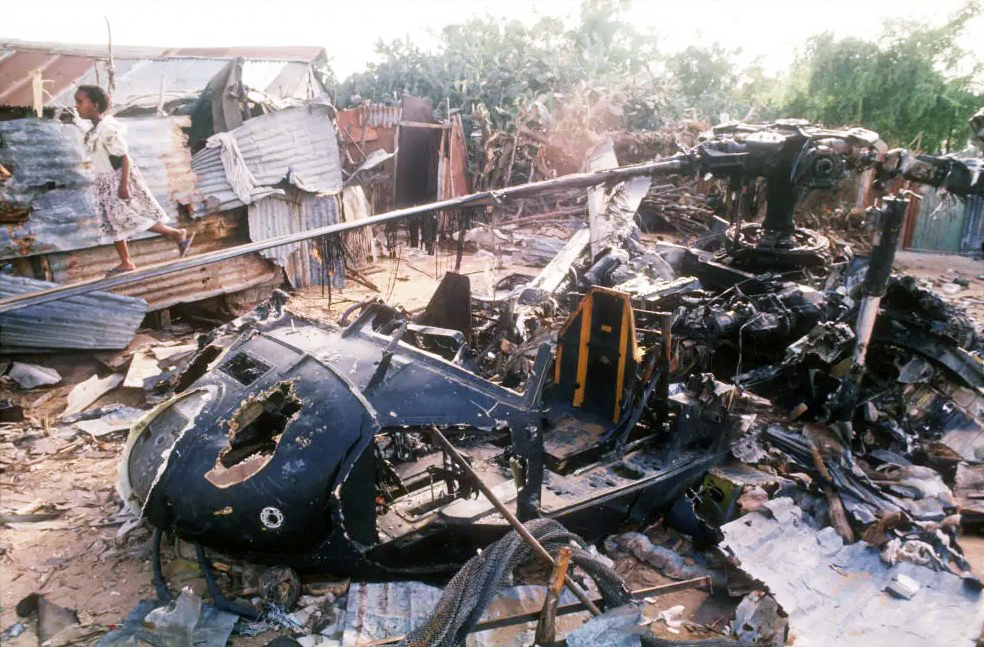
The 1993 U.S. military raid in Mogadishu, Somalia, during the Battle of Mogadishu, is shown in the film. After two Black Hawk helicopters are shot down, what was meant to be a swift mission to apprehend warlord lieutenants devolves into a bloody urban conflict.

black-hawk-down - choper

Main Cast

Josh Hartnett
Ewan McGregor
Eric Bana
Tom Hardy (early role)
Orlando Bloom

https://designerchoicevja.blogspot.com/

Why it’s well-known

incredibly lifelike battle scenarios
Strong, nearly instantaneous narration

demonstrates the violence and complexity of urban combat.
Strong emphasis on military fraternity

Awards

Won 2 Academy Awards (Best Film Editing & Best Sound) at the Academy Awards

Impact on the Real World

Following Somalia, the events depicted had an impact on U.S. military intervention plans and foreign policy. The actual fight turned into one of the most researched modern warfare situations.

The movie is based on Mark Bowden’s book Black Hawk Down, which gives a thorough description of the soldiers and the mission.

The Real Story Behind Black Hawk Down

The film is based on an actual military operation that happened during the Battle of Mogadishu in Mogadishu on October 3–4, 1993.

Why did the United States send troops to Somalia?

Famine and civil strife plagued Somalia in the early 1990s. Humanitarian help was provided by the United States and the United Nations.
Mohamed Farrah Aidid, a strong warlord who controlled a large portion of Mogadishu, was attacking UN forces. The United States started a mission to apprehend his senior leaders.
Mohamed Farrah Aidid

The Purpose

October 3, 1993 – Soldiers from the Delta Force and U.S. Army Rangers were dispatched to apprehend Aidid’s lieutenants.

The strategy was straightforward

Go into the city,  Attack targets , Leave in less than an hour , What went wrong

Everything was altered when

RPGs were used by Somali militia militants to bring down two Black Hawk helicopters.
There was fierce fighting at the crash locations.

The Conflict

Overnight, American soldiers were stranded in enemy territory.
Thousands of armed militia men confronted them.
Rescue was quite challenging due to communication breakdowns and urban pandemonium.
Two soldiers, Gary Gordon and Randy Shughart, were given the Medal of Honor for their valor after they willingly went to guard a crash site.

Deaths

18 American soldiers were killed and 73 injured.
Hundreds (perhaps more than 1,000) Somali soldiers and civilians were slain. (Black Hawk Down)

Worldwide Shock

Worldwide, footage of dead American soldiers being hauled through the streets was aired. The United States was greatly outraged by this.

US Aftermath

The United States made the decision to remove its soldiers from Somalia.
Future U.S. military decisions were significantly impacted by the conflict (greater prudence in overseas interventions).

Reality vs. Film

The majority of the movie is true, particularly the level of combat.
A few characters have been simplified or combined.

The film mostly concentrates on American soldiers, giving Somali viewpoints minimal attention.

One important lesson from the Battle of Mogadishu was

Dangers of urban warfare
Military power limitations
The significance of well-defined mission planning  (Black Hawk Down)

Black Hawk Down’s Hidden Details Were Not Shown

Although the movie Black Hawk Down is dramatic and largely true, it omits a number of crucial details about the Battle of Mogadishu.

1. The role of the UN and international forces was greater.

Although American soldiers are the main focus of the film, in actuality…

UN forces from Malaysia and Pakistan were essential to the rescue.
Malaysian armored trucks assisted in freeing soldiers who were trapped.
The number of casualties could have been much higher without them.

There is very little evidence of this international endeavor.

2. The Largely Missing Somali Civilian Perspective

Somalis are primarily depicted in the movie as armed combatants, but…..

Numerous bystanders were trapped in the crossfire.
The local militia frequently consisted of regular people protecting their communities.
The film does not adequately address the large number of civilian casualties.

3. Inadequate Mission Intelligence

The United States misjudged the circumstances…

They thought there would be little resistance.
Widespread militia mobilization was not anticipated.
Somali fighters have a significant edge due to urban terrain.

The mission was badly evaluated in addition to being unlucky.

4. Initially, No Heavy Armor

One crucial error

At first, American soldiers did not use armored vehicles or tanks.
They were therefore exposed when the helicopters crashed.
Earlier reports stated that requests for armor had been turned down.

5. The Confusion in the Battle Was Greater Than Shown

In actuality…

In small streets, units got lost.
Communication systems frequently broke down.
For hours, several soldiers were alone and unsupported.

It was even more chaotic than the movie depicts. (Black Hawk Down)

6. “Mogadishu Mile” Was More Cruel

The film depicts soldiers fleeing to safety, but…

It took place in the midst of continuous fire.
Many were already hurt and worn out.
It was lengthier and less structured than what was seen.

7. There Are Few Details About Delta Force

Delta Force and other elite units had…

More intricate responsibilities than those depicted
Coordination and classified tactics
Certain acts are still not entirely public.

8. There Were Serious Political Repercussions

The United States changed its foreign policy strategy.
Leaders started to use greater caution while making interventions.
Decisions in subsequent confrontations were impacted by this incident.

9. Mohamed Farrah Aidid Was Never Apprehended

In spite of the mission….

Mohamed Farrah Aidid was still at liberty.
Later on, he proclaimed himself Somalia’s president.
The mission’s primary goal was ultimately unsuccessful.

10. The Stories of Real Soldiers Are Even More In-Depth

Included in Mark Bowden’s book are…

Personal anxiety, perplexity, and ethical quandaries
Errors and mistakes made by people
After the war, emotional anguish

Many of these human aspects are simplified in the film. (Black Hawk Down)

The action and bravery are depicted in the movie, however the true narrative also revolves around

Inaccurate calculations
Suffering of civilians  (Black Hawk Down)

International collaboration
Political repercussions

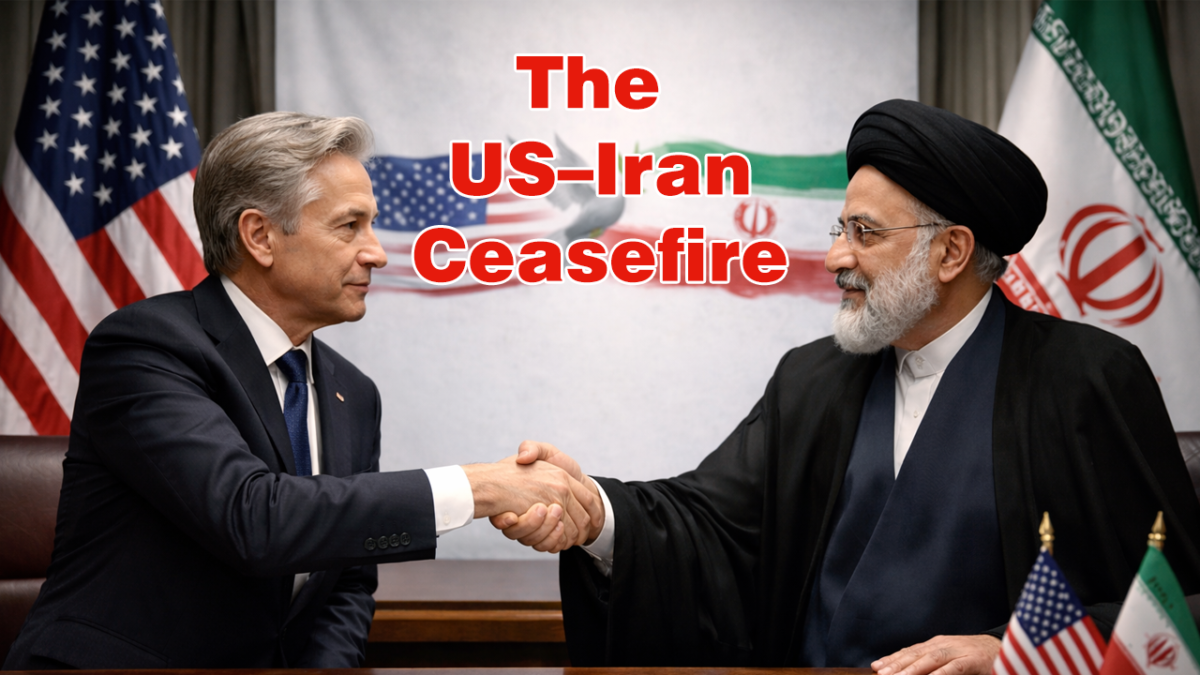
The US–Iran Ceasefire

The US–Iran Ceasefire (April 2026) is not a long-term peace agreement, but rather a precarious one.

What is the ceasefire? (US–Iran Ceasefire)

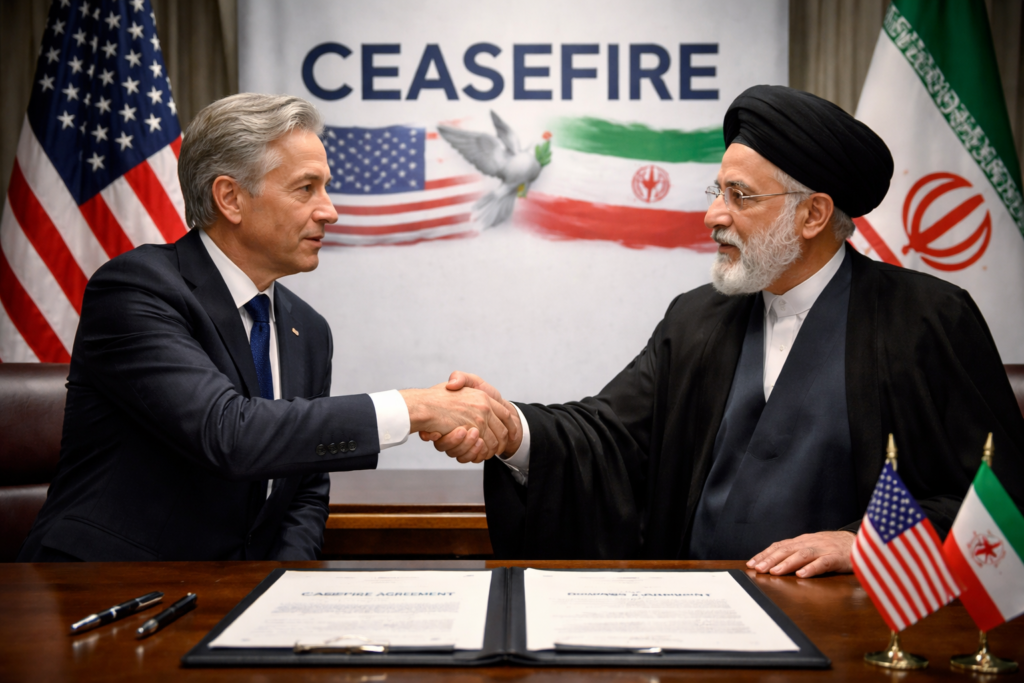
Around April 8, 2026, the United States and Iran started a two-week ceasefire.

Pakistan mediated it in an attempt to halt the war’s escalation.

One crucial requirement is that Iran permit oil transportation via the Strait of Hormuz once more.

US–Iran Ceasefire , Why it’s important

The fighting had already interfered with shipping lanes and the world’s energy supplies.

The Strait of Hormuz is strategically important since it transports over 25% of the world’s oil commerce.

Global economic harm might persist even after the ceasefire.

What is the ceasefire? (US–Iran Ceasefire)

Around April 8, 2026, the United States and Iran started a two-week ceasefire.

Pakistan mediated it in an attempt to halt the war’s escalation.

One crucial requirement is that Iran permit oil transportation via the Strait of Hormuz once more.

Why it’s important (US–Iran Ceasefire)

The fighting had already interfered with shipping lanes and the world’s energy supplies.

The Strait of Hormuz is strategically important since it transports over 25% of the world’s oil commerce.

Global economic harm might persist even after the ceasefire.

Present circumstances as of right now (US–Iran Ceasefire)

There is pressure on the ceasefire.
Terms and trust issues continue to be contentious.

Discussions are still going on, although they are unclear.
Shipping is still interrupted
Traffic hasn’t returned to normal, and several oil tankers remain stalled.
Tensions in the region persist
The truce is being complicated by fighting between Israel and Hezbollah (Lebanon).
There is disagreement among some parties over whether Lebanon is covered by the ceasefire.

Important issues with the ceasefire (US–Iran Ceasefire)

Short-term (around two weeks)
No complete consensus on military or nuclear matters

US–Iran Ceasefire

The US, Iran, and Israel have different perspectives.
Proxy wars that are still going on in the area

The ceasefire between the US and Iran is not peace, but rather a pause in hostilities. Although it lowers the immediate risk of war, it might fall apart at any point if hostilities resurface.

most realistic future scenarios

In order of likelihood to risk, these are the most plausible future possibilities following the US-Iran ceasefire in April 2026

1.  (probably)

Although there is a temporary ceasefire in place, tensions are still high.

What takes place

The US and Iran are still having backchannel discussions.
Quietly, limited military operations (cyberattacks, covert operations) resume.

The Strait of Hormuz’s oil flows gradually improve.

A “cold conflict”—not a genuine war, but neither a true peace.

2. Collapse of the (US–Iran Ceasefire) ceasefire → Limited war

A trigger event causes the truce to end.

Potential causes

Oil tanker attack in the Persian Gulf
Iran-backed organizations launched a missile strike
Direct conflict with Israel

What takes place

Resuming airstrikes and naval combat
US targets military installations in Iran
Iran interferes with shipping once more

A brief but fierce battle (weeks to months), a jump in oil prices worldwide

3. The intensification of regional conflicts

The US vs. Iran conflict is not the only one.

Who participates

Iran and its proxies Against Israel
Lebanon’s Hezbollah
Saudi Arabia and other Gulf states

What takes place

War on multiple fronts (Lebanon, Syria, Gulf seas)
Large-scale missile exchanges
Damage to infrastructure and civilians increases dramatically

Global economic shock and war throughout the Middle East

4. The nuclear crisis (high risk, low chance, but serious)

if hostilities get out of control.

What takes place

Iran’s nuclear program is accelerating
Preemptive strikes are taken into consideration by the US or Israel.
Nuclear plants are targeted

Extreme escalation danger and worldwide panic (but still preventable)

5. Breakthrough agreement (ideal, but challenging)

Diplomacy is successful.

What would be needed

A new nuclear pact
Iran’s sanctions are lifted
assurances of security in the area

Long-term stability, normalization of oil markets, and a notable decrease in tensions

https://designerchoicevja.blogspot.com/

Key takeaway

70% likelihood → tense/fragile peace
20% probability → limited conflict
8–9% probability → regional escalation
A 1-2% likelihood of a nuclear crisis
Low but optimistic → a genuine peace agreement

The Strait of Hormuz is the most important thing to keep an eye on.

Peace will prevail if shipping remains open.  If it is prevented, the conflict quickly intensifies.

How does Hezbollah relate to Lebanon?

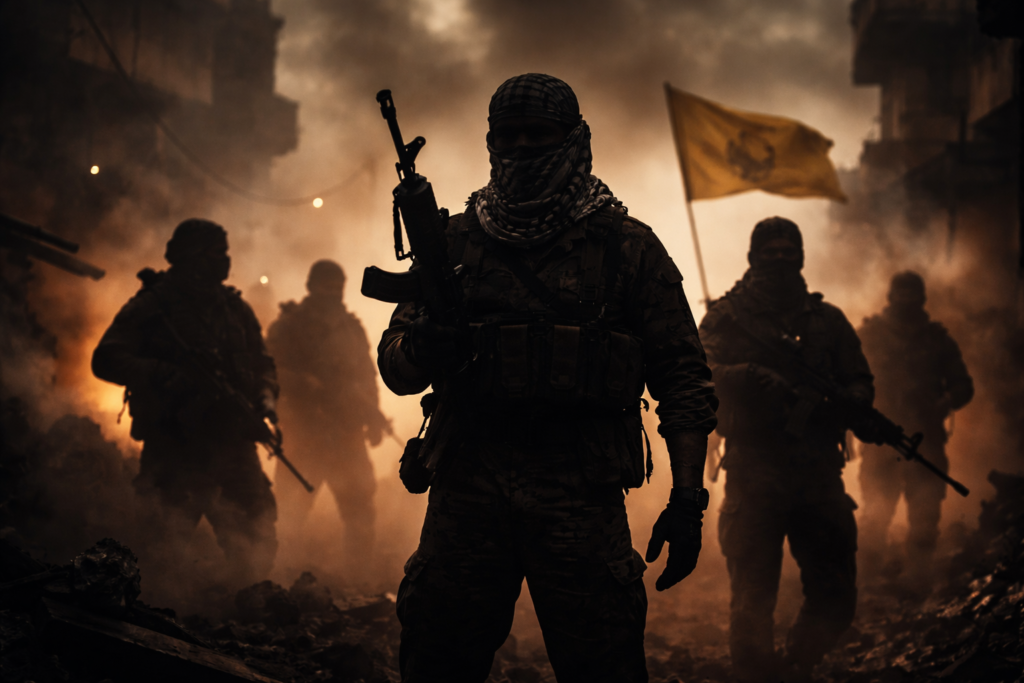
Hezbollah is crucial to any US-Iranian battle since it is one of Iran’s most significant partners in the Middle East.

1. Hezbollah’s definition

A strong political and militant organization with its headquarters in Lebanon
controls important military units, including fighters, drones, and rockets.

A component of the political system in Lebanon

Consider it both a political party and a militia.

Militant

https://rapidknowledge.in/2026/03/28/https-rapidknowledge-southern-lebanon/

2. The relationship between Iran and Hezbollah

Hezbollah is frequently referred to as Iran’s most powerful proxy.

Iran provides Hezbollah with

Finance , Weapons (drones, missiles)
Education (via the Islamic Revolutionary Guard Corps)
Iran’s motivation for doing this
To use force without going to war
To put pressure on US allies including Israel
to establish a deterrent force close to Israel’s boundaries

3. Participation in the US-Iran war

One important “backup force” for Iran is Hezbollah.

If the conflict intensifies

Israel could be attacked by Hezbollah from southern Lebanon.
Send out thousands of rockets
Launch a second front in the conflict

Lebanon war

As a result, a conflict between the US and Iran becomes a regional conflict.

4. The reason for Israel’s involvement

Israel and Hezbollah have long been at odds.
In 2006, they engaged in a significant conflict in Lebanon.

Hezbollah’s missile arsenal makes it a serious danger to Israel.

5. Why this is important right now

In the present state of the ceasefire

Even if the war between the US and Iran is halted…
Hezbollah is still able to carry out indirect assaults.

 The ceasefire (US–Iran Ceasefire) is brittle because of this

Hezbollah and other proxy groups could not be completely under its authority. A brief synopsis
Iran’s closest regional ally is Hezbollah.
serves as a stand-in for the US and Israel.
can intensify hostilities even if Iran stops

Mystery of Flight MH370

One of the most puzzling and terrible aviation mysteries in contemporary history is the disappearance of Malaysia Airlines Flight MH370.

Flight MH370 – Absence

A planned passenger flight from Kuala Lumpur, Malaysia, to Beijing, China, was Malaysia Airlines Flight MH370. Less than an hour after takeoff, on March 8, 2014, the Boeing 777-200ER aircraft disappeared from radar screens while over the South China Sea. The total number of passengers and crew members on board was 239.

Operation for Search and Rescue

An comprehensive international search and rescue effort was started in the wake of Flight MH370’s disappearance in an attempt to find the missing aircraft. When fresh satellite data and analysis suggested that the aircraft might have strayed from its intended flight path, the search first concentrated on the South China Sea before extending to the Indian Ocean.

Investigation

With support from a number of other nations and international organizations, Malaysia spearheaded the inquiry into the disappearance of Flight MH370. Conclusive proof was elusive despite the consideration of numerous theories and possibilities, such as technical failure, pilot error, hijacking, sabotage, and intentional diversion.

Debris Findings

Many bits of debris identified as belonging to Flight MH370 were discovered washed up on beaches in the western Indian Ocean in the years after the plane vanished, far from its final known location. These findings improved search efforts and offered vital hints on the aircraft’s fate.

Official Conclusion

A final assessment on the loss of Flight MH370 was published by the Malaysian government in July 2018. It stated that the aircraft’s departure from its intended flight path was probably caused by “unlawful interference by a third party.” The report did not, however, provide a definitive explanation for the aircraft’s loss or its whereabouts.

Persistent Mystery

The precise circumstances of Flight MH370’s disappearance are still unknown despite intensive search and investigation efforts. The mystery and fascination surrounding the case have been increased by conjecture and conspiracy theories sparked by the lack of solid evidence and the disappearance of the aircraft’s wreckage.

Flight MH370

https://designerchoicevja.blogspot.com/

Examination

Families of the passengers and crew of Malaysia Airlines Flight MH370 are still grieving and have unanswered questions regarding the terrible and unsolved aviation mystery.

Most convincing theory

The most plausible explanation for the missing of Malaysia Airlines Flight MH370

Although there isn’t a formal conclusion, the most widely held theory among investigators and aviation specialists is

Intentional distraction combined with hypoxia (also known as “ghost flight”)

How this theory operates

1. A deliberate shift in direction

The aircraft abruptly turned around after taking off from Kuala Lumpur.
This move was too exact to have happened by chance, indicating that someone in the cockpit was using manual control.

2. Cessation of communication

Instead of being destroyed, the aircraft’s communication systems were only partially shut off.

This suggests that the person is knowledgeable with the aircraft systems and is probably a pilot.

3. A flight into seclusion

In order to evade radar detection, the aircraft flew along established navigation paths.

After there, it moved south into one of the world’s most isolated areas—the Indian Ocean.

4. Hypoxia (depletion of oxygen)

Depressurization of the cabin could have happened on purpose or by accident.
Passengers and personnel would silently pass out as a result of this.

After that, the plane flew for hours on autopilot.

5. Ultimate fuel depletion

The engines ran out of fuel after a few hours.
The aircraft most certainly plunged quickly into the water, far from any shipping lanes or land.

Why suspicions of pilot involvement are common

Zaharie Ahmad Shah, the captain, is frequently the center of attention

Zaharie Ahmad Shah

He was completely knowledgeable about aviation systems.
had a flight simulator at home.
Reportedly, destroyed simulator data revealed a similar path into the southern ocean (not conclusive evidence, but noteworthy).

Crucial: There is no solid proof of his involvement, and this is still debatable.

Why this idea is the most robust

describes the controlled reversal.

matches “handshake” data from satellites
The absence of a distress signal is appropriate.
In line with debris discovered in the further south, such as close to Réunion Island

What remains unknown

The precise cause or motivation
The location of the final crash
Was there anyone else involved?

https://rapidknowledge.in/2026/03/20/https-rapidknowledge-in-regicide/

Many experts believe that the “deliberate diversion + hypoxia” argument is the most compelling because it fits the majority of the available data. However, MH370 is still unsolved in the absence of the primary wreckage.

Charles Ponzi

Italian-born con artist and swindler Charles Ponzi (1882–1949) gained notoriety for running a fraudulent investment scam that became known as the “Ponzi scheme.” His name has come to be associated with this kind of deception.

Early Years

On March 3, 1882, Ponzi was born in Lugo, Italy. After moving to the US in 1903, he worked odd jobs for a while before committing crimes.

The Scheme

In Charles Ponzi’s fraudulent scam, investors were promised large returns on their investments in international reply coupons. He asserted that he could make substantial gains by taking advantage of variations in currency exchange rates. In actuality, though, he was setting up a traditional pyramid or Ponzi scheme by using the funds of new investors to settle debts owed to previous investors.

Quick Growth

In the early 1920s, Ponzi’s scam became incredibly popular. He established the Securities Exchange Company to attract investors and promised incredibly high returns on investments in a short period.

Decline

When financial experts and investigative journalists began to doubt the viability of Ponzi’s operation, the scheme started to fall apart. Eventually, an investigation by the authorities exposed the scheme’s bogus character.

Legal Issues

Charles Ponzi was detained in August 1920 on suspicion of mail fraud. He was found guilty and given a prison term. For his misdeeds, he was imprisoned for a number of years.

Legacy

Since then, the phrase “Ponzi scheme” has been used to refer to any fraudulent investment operation in which investors receive returns from the money given by later investors rather than from actual earnings. After Charles Ponzi, others have engaged in Ponzi schemes, causing victims to suffer large financial losses.

Charles Ponzi

Returns on Investment

Charles Ponzi promised investors lavish returns of 100% in 90 days or 50% in 45 days. These returns were significantly higher than what could be achieved with respectable investment strategies.

First Success

Many investors were first drawn to Ponzi’s scheme by the promise of large returns. In order to create the appearance of profitability and draw in more participants, he used the funds from new investors to settle debts owed to previous investors.

The scheme’s scale

Charles Ponzi was making a lot of money from investors at the peak of his business. In a matter of months, he is thought to have raised about $15 million, or more than $200 million in today’s currency.

Journalist’s exposé

After looking into Charles Ponzi’s business, financial journalist Clarence Barron wrote a number of pieces that exposed the scam in the Boston Post. Barron’s investigation was crucial in exposing Ponzi’s dishonest practices.

The King of Fraud

https://designerchoicevja.blogspot.com/

Bankruptcy and Collapse

When Charles Ponzi was unable to satisfy the growing demands of investors looking to withdraw their money, his scam fell apart in August 1920. Investors lost the majority of their money when the Securities Exchange Company filed for bankruptcy.

Court Cases and Detention

Charles Ponzi was accused of several instances of mail fraud following his detention, and he was subject to legal action. He was given a prison sentence after entering a guilty plea to federal mail fraud charges.

Repercussions and Impact

Investor protection and financial regulation have been permanently impacted by Charles Ponzi’s fraud. Reforms in securities regulation resulted from his deception, which highlighted the need for more stringent supervision and protections in the financial sector.

The prevalence of Ponzi schemes

Even though Ponzi’s name is associated with fraud, Ponzi-like scams have persisted over time, preying on gullible investors. Participants suffer financial losses as a result of the schemes’ frequent demise.

Cultural and Media Allusions

Books, documentaries, and movies that examine Ponzi’s ascent and decline include Mitchell Zuckoff’s “The Ponzi Book” and Robert De Niro’s portrayal of Ponzi scheme mastermind Bernie Madoff in the movie “The Wizard of Lies”.

Death and Later Life

Following his release from prison, Ponzi had more legal issues and was incarcerated for offenses unrelated to his initial plan. In 1934, he was finally exiled to Italy. On January 18, 1949, Charles Ponzi passed away in poverty in Rio de Janeiro, Brazil.

Due diligence and prudence are crucial while making financial decisions, as demonstrated by Charles Ponzi’s scheme and the ensuing legal ramifications. His narrative serves as a warning to investors and a reminder of the possible dangers connected to fraudulent schemes.

One of the most well-known instances of financial fraud in history is still Charles Ponzi’s scheme. His name serves as a warning to investors and has come to be associated with dishonest investment schemes.

https://rapidknowledge.in/2026/03/26/https-rapidknowledge-in-charles-sobhraj/

The reasons behind the war between America and Iran

Decades of tension, mistrust, and geopolitical rivalry have led to  the war between America and Iran
the war between America and Iran

1. Historical foundations (since 1953 & 1979) the war between America and Iran

To safeguard its oil interests, the United States assisted in the overthrow of Iran’s elected government in 1953.

The U.S.-friendly Shah was overthrown by an anti-American Islamic government in 1979 as a result of the Iranian Revolution.

Relations quickly deteriorated due to the hostage situation in Iran.

Both nations have seen one another as adversaries ever since.

https://designerchoicevja.blogspot.com/

2. The problem of nuclear weapons

Iran may be attempting to develop nuclear weapons, according to the United States.

Iran claims that its program is solely focused on peaceful energy.

In an attempt to curb Iran’s development, the United States withdrew from the Joint Comprehensive Plan of Action in 2018.

One of the main causes of war in the modern world is this.

3. The Middle East’s power struggle

Iran backs organizations such as militias in Syria, Lebanon, and Iraq.

The United States backs nations like Israel and those in the Gulf.

In the area, both are vying for power and influence.

(the war between America and Iran)

4. Attacks and tensions in the military

Iran was subject to severe sanctions from the United States.

Groups supported by Iran attacked American allies.

The United States conducted strikes, like as the 2020 assassination of Iranian General Qasem Soleimani.

Both sides continued to get closer to war as a result of these measures.

(the war between America and Iran)

5. What led to the most recent conflict (2025–2026)

Negotiations on nuclear weapons failed
Israel and the United States conducted airstrikes against Iran’s nuclear and military facilities.

Iran threatened to restrict oil routes and retaliated with missiles.

The present war resulted from this escalation.

(the war between America and Iran)

6. The impact of oil on the world

An important oil conduit, the Strait of Hormuz, can be blocked by Iran.
This has an impact on economies and oil prices worldwide.

The entire globe is worried because of this.

(the war between America and Iran)

The reasons behind the confrontation between the United States and Iran are

Anger from the past
Fears of nuclear weapons
Power rivalry in the Middle East
Sanctions and military assaults
Inadequate diplomacy

(the war between America and Iran)

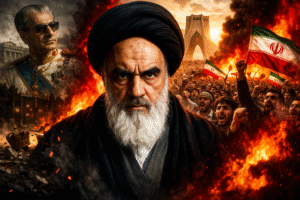
Revolution in Iran

Iran’s transition from a pro-Western monarchy to an Islamic republic during the Iranian Revolution marked a significant turning point in world history.

What was the Iranian Revolution?

Millions of Iranians staged a huge uprising in 1979 to overthrow the Shah, their country’s ruler.

The Shah: Mohammad Reza Shah Pahlavi
Revolutionary leader: Ruhollah Khomeini

Revolutionary

As a result, Iran was transformed into an Islamic nation governed by religious authorities.

What caused it to occur?

1. Oppression and dictatorship

The Shah exercised enormous authority.

Opposition was repressed by secret police (SAVAK).
There was no political freedom for people.

2. Inequality in the economy

Wealth from oil rose, but
Rich became richer.
The impoverished suffered
Many believed that the system was unjust.

3. Western influence, particularly American

The United States gave the Shah strong assistance.

Many Iranians thought Western concepts were taking the place of their culture and religion.

Anti-American attitude resulted from this.

4. Opposition based on religion

Clerics such as Khomeini were against
Westernization
The secular rule
They desired a Shia-based Islamic government.

Important occasions

1978: Widespread demonstrations start
January 1979: Shah leaves Iran

Khomeini returns from exile in February 1979
The monarchy falls
Iran transforms into the Islamic Republic

1. The new system

Theocracy (religious rule) is established in Iran.
The Supreme Leader has final authority.

2. The hostage situation

The US Embassy was taken over by Iranian students, and 52 Americans were kept captive for 444 days.

This ruined ties between the United States and Iran.

3. Middle East politics were altered by the global effect

Islamic movements that were inspired

caused ongoing hostility with the United States.

The Iranian Revolution took place due to

People were against the Shah’s authority.
Inequality in the economy

Anger over Western influence
Growth of religious leadership

Outcome

The Islamic Republic was established when the monarchy collapsed.

The war with the United States started

https://rapidknowledge.in/2026/03/12/the-strait-of-hormuz/

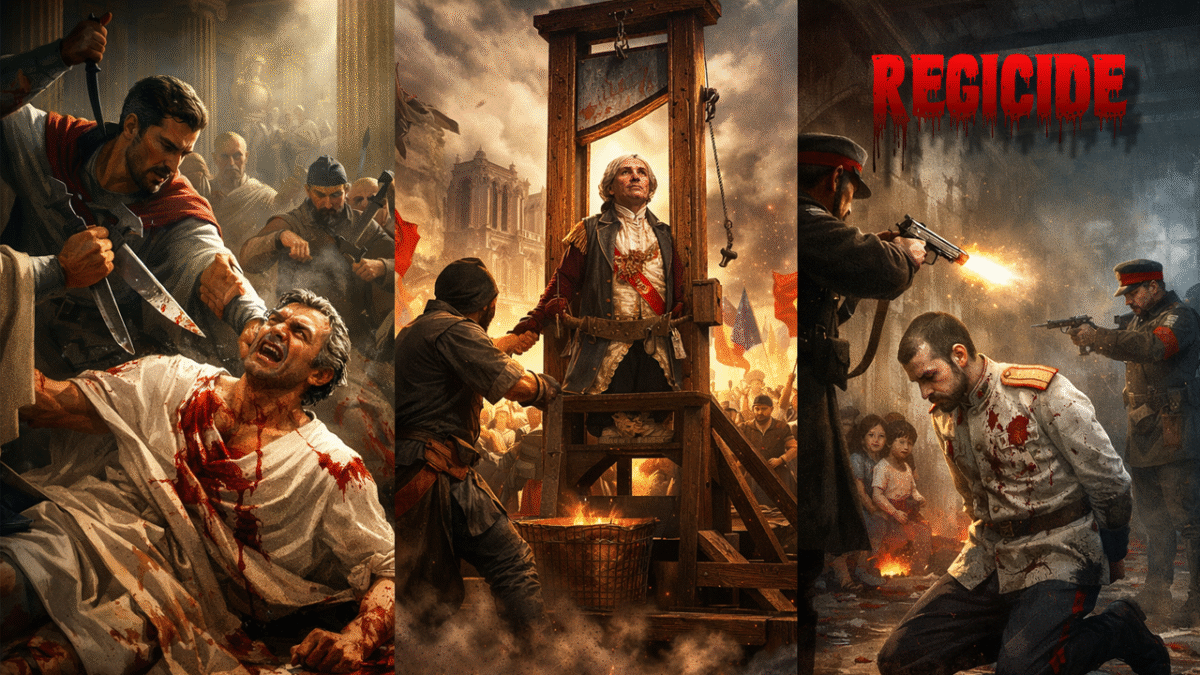
REGICIDE

The term “regicide” describes the murder of a king or other ruler, usually with the goal of depriving them of their position of authority.

Historical Context

Regicide has taken place in many political and civilizational contexts throughout history. A number of factors, such as political turmoil, insurrection, succession issues, religious conflicts, and personal grudges, have led to the assassination of monarchs and other rulers.

Methods

Assassination, poisoning, execution, and staged accidents are just a few of the ways that regicide can be committed. The circumstances, incentives, and resources at the offenders’ disposal frequently influence the strategy selected.

Notable Examples

Regicide has occurred frequently throughout history, and some of these incidents have had a major impact on how cultures and nations have developed.

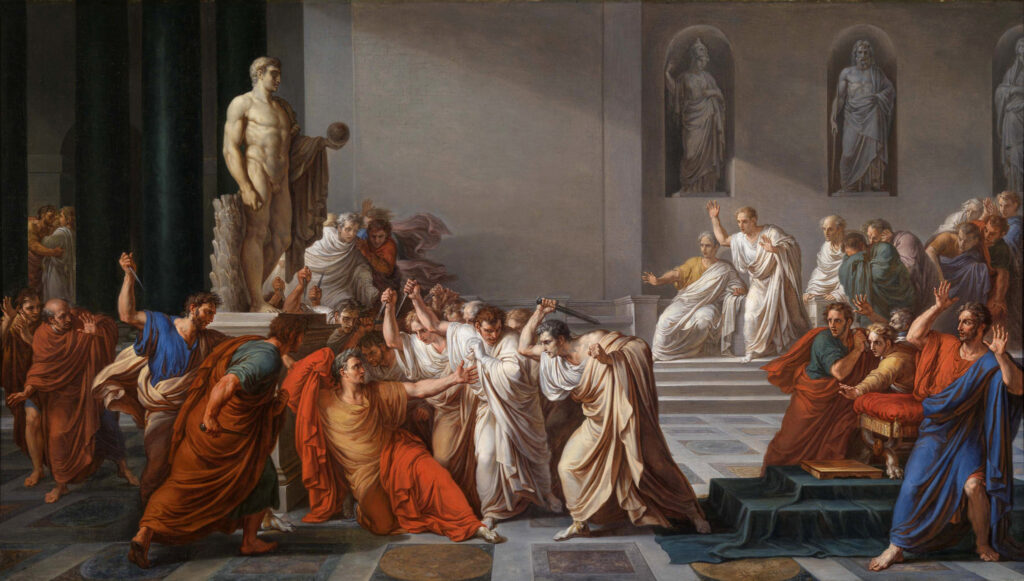
Julius Caesar

One of the most well-known cases of regicide in ancient history was the assassination of Julius Caesar in 44 BCE by a group of Roman senators led by Brutus and Cassius. Rome went through a period of political unrest and civil strife after Caesar’s death. (regicide)

Julius Cesare

https://designerchoicevja.blogspot.com

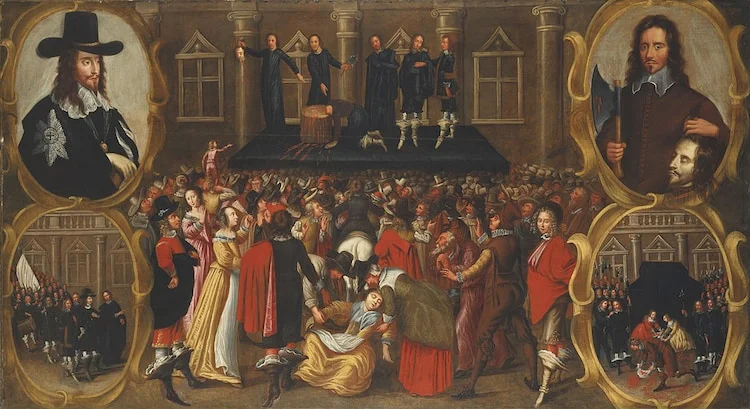
Charles I of England

Following his defeat by Oliver Cromwell’s parliamentary armies during the English Civil War, Charles I was beheaded in 1649. For a short while, known as the English Interregnum, his execution signaled the end of the monarchy in England. (regicide)

Louis XVI of France

After the French Republic was established and the monarchy was abolished in 1793, Louis XVI was put to death by guillotine during the French Revolution. His execution represented the fall of the previous government and the emergence of revolutionary principles. (Regicide)

Nicholas II of Russia

In 1918, during the Russian Revolution, Bolshevik rebels put Nicholas II, the country’s final Tsar, and his family to death. The Romanov dynasty came to an end with the execution, and Communist dictatorship in Russia began. (regicide)

Legal and Moral Repercussions

Regicide is frequently seen as a serious crime with grave moral and legal ramifications. It can result in instability, anarchy, and bloodshed and directly challenges the legitimacy and authority of the governing regime. Regicide carries harsh punishments, such as death or incarceration, in many countries.

All things considered, regicide is an important historical phenomena that has influenced political history and had profound effects on national stability and government. It continues to be a potent representation of revolution, resistance, and the fight for freedom and power. (Regicide)

https://rapidknowledge.in

Regicide – An Advanced View

1. The Political Theory of Regicide

The perception of regicide varies depending on one’s ideology:

A. Tyrannicide (Justifiable Murder)

According to some thinkers, if a ruler is a despot, it may be morally acceptable to kill them.

Locke, John
felt the people had the right to remove unfair leaders from power.

Aquinas, Thomas
discussed whether overthrowing a despot may be justified for the benefit of all. According to this perspective, regicide is an act of emancipation.

B. Kings’ Divine Right (Unjustifiable Crime)

James VI and me
ardent advocate of the notion that God selects kings.

According to this theory, regicide is equal to treason plus sin.

2. The Regicide of Revolution

A. occurs during revolutions.

Symbolic and public

For instance, Louis XVI of France

B.Regicide via Conspiracy

Insiders or elites with covert schemes

For instance, Julius Caesar

C. The Regicide of Dynasties

For power inside royal families

For instance, In a similar power battle, Aurangzeb imprisoned his father, Shah Jahan, rather than killing him.

d. Regicide based on ideology

Motivated by political philosophies (nationalism, communism)

Nicholas II of Russia, for instance

3. Additional Worldwide Examples

The Ancient World

Macedon’s Philip II
Alexander the Great’s father

The Middle Ages

England’s Edward II
After being ousted, possibly slain.

Early Modern Era

Sweden’s Gustav III
Famous dramatic regicide, shot at a masked ball.

The Modern Era

As monarchs fall, political assassinations persist but true regicide becomes less common.

4. Regicide Causes (Deep Analysis)

a. Power Abuse

High taxes, Oppression, Decline in popular confidence

During the French Revolution

B. Unpredictability in politics

Inadequate leadership

Observed during the English Civil War

C. Shift in Ideology

Growth of nationalism, socialism, and democracy

During the Russian Revolution

D. Struggles for Elite Power

Leaders in the military or nobles vying for power

Observed in Roman plots

5. Regicide’s Aftereffects

a. Direct Impacts

Civil war or chaos, Using a power vacuum, Murders committed in retaliation

b. Long-Term Consequences

1. Emergence of Novel Systems

Republics, Democracies, Communist nations

For instance, under Louis XVI of France, the Republic

2. Monarchy’s Strengthening

Regicide can occasionally backfire and result in more powerful rulers.

3. Symbolic Significance

Regicide conveys a strong message

“No ruler is untouchable.”

6. Regicide in Literature and Culture

A common motif in stories is regicide

Macbeth

A king is killed in order to gain power, which results in shame and demise.

The Game of Thrones

Brutal power battles are demonstrated by the deaths of several kings.

7. Contemporary Significance

Despite the fact that there are fewer kings now

Political assassinations have evolved from regicide.

Presidents and prime ministers are among the leaders who confront comparable dangers.

For instance, John F. Kennedy (similar influence but not a king)

8. Crucial Realization

Killing a ruler is only one aspect of regicide;

other aspects include…….

Power’s legitimacy

The freedom of individuals to rebel

Political system transition

It frequently signifies the end of one era and the start of a new one.

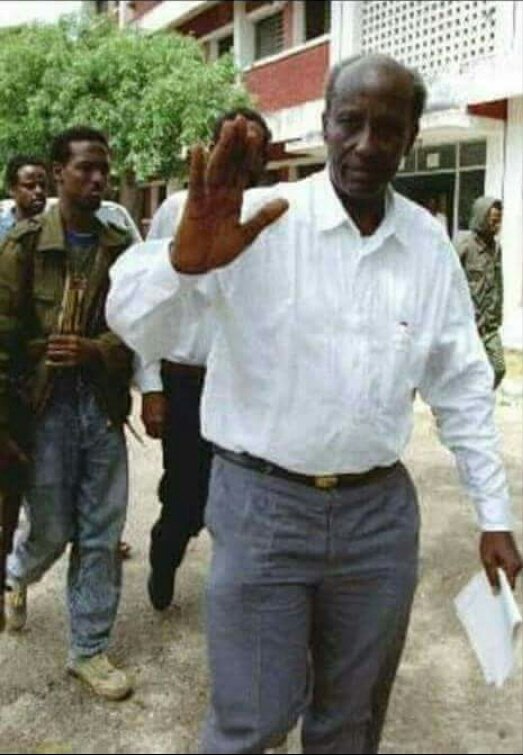
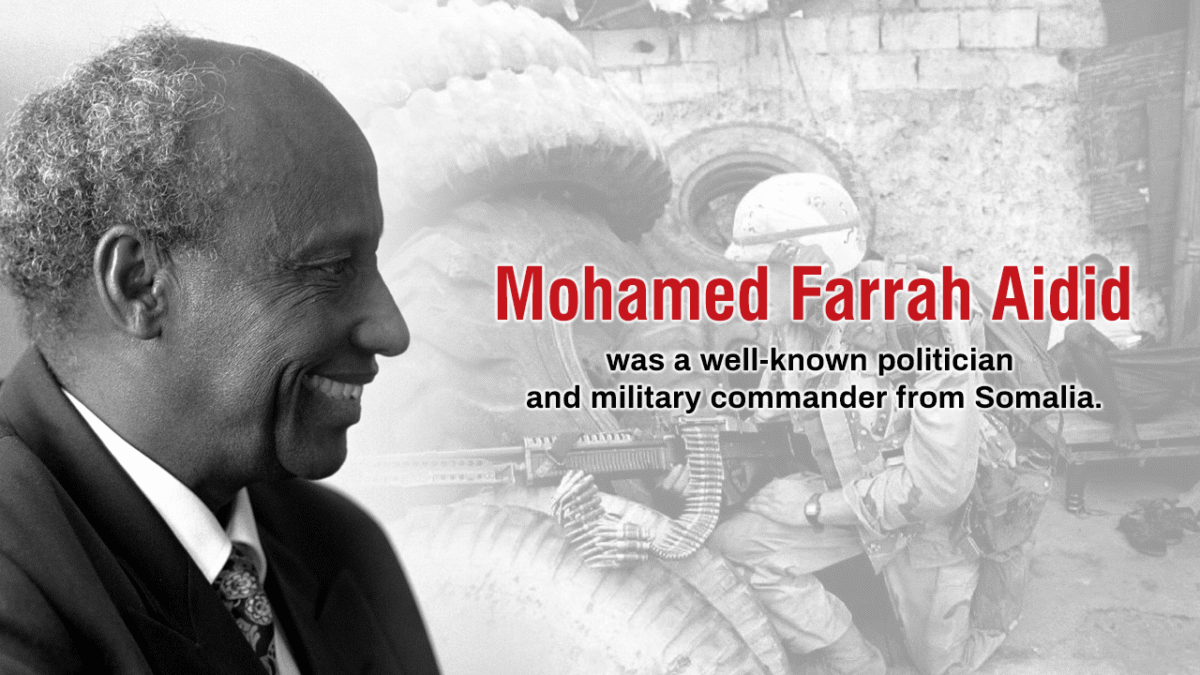
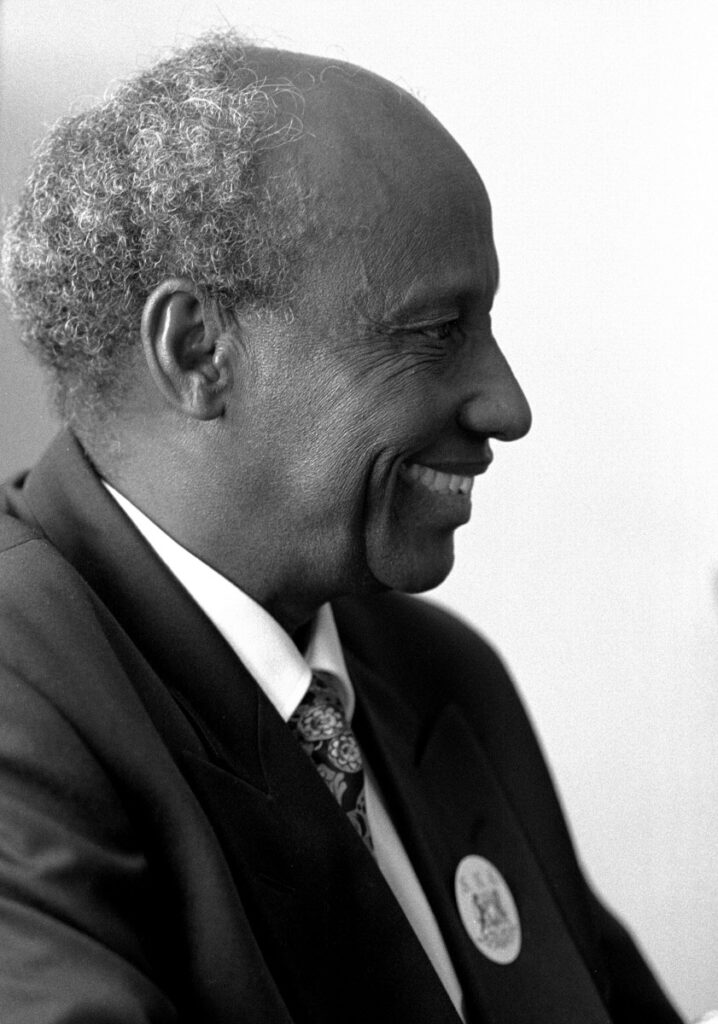
Mohamed Farrah Aidid

Mohamed Farrah Aidid (1934–1996) was a well-known politician and military commander from Somalia. He had a big impact on Somalia’s complicated late 20th-century political environment. Aidid became well-known in the 1980s as a leading member of the Somali National Movement (SNM), a rebel organization opposing President Siad Barre’s government.

https://designerchoicevja.blogspot.com

Mohamed Farrah Aidid

When Barre’s government fell in 1991 and Somalia fell into anarchy, Aidid’s power and influence grew in the early 1990s. A civil war sprang out as several groups and warlords fought for dominance. In the capital city of Mogadishu, Aidid became one of the strongest warlords.

UNOSOM, a United Nations peacekeeping force, was sent to Somalia in 1992 with the goal of restoring order and delivering humanitarian supplies. However, there were a number of violent clashes between Mohamed Farrah Aidids soldiers and the UN forces. The most prominent event was the October 3–4, 1993, Battle of Mogadishu, popularly referred to as the “Black Hawk Down” incident. Both sides suffered heavy casualties as a result of the intense gunfight between Aidid’s forces and Delta Force soldiers and U.S. Army Rangers.

As international pressure mounted on Aidid’s faction, the Battle of Mogadishu signaled a sea change in his power. A resolution to apprehend and prosecute Aidid for his involvement in impeding humanitarian efforts was passed by the UN Security Council in 1995.

But before going on trial, Mohamed Farrah Aidid passed away on August 1, 1996. After having a heart attack in Mogadishu, he was sent to a Saudi Arabian hospital for treatment, where he eventually died. Hussein Mohamed Aidid, Aidid’s son, succeeded his father as the faction’s head following his passing.

A prominent character in Somali history, Mohamed Farrah Aidid is best known for his participation in the country’s civil war and his opposition to the UN’s presence there.

Rise to Power

Born in 1934 in Beledweyne, Somalia, Aidid is a member of the Hawiye tribe. He first worked for President Siad Barre’s administration as a police officer, but political and clan-based conflicts caused him to turn against Barre.

Aidid rose to prominence as a leader of the Somali National Movement (SNM), a rebel organization mainly made up of Isaaq clan members in northern Somalia. The SNM sought to topple the Barre government and give the Isaaq people their own sovereign state.

USC formation

Aidid established the United Somali Congress (USC), a political and military group, following the fall of Barre’s administration in 1991. The USC sought to unify different clans under a single banner and close the power gap in Somalia. However, internal strife and factionalism at USC caused more unrest.

Control of Mogadishu

In 1991, Mohamed Farrah Aidid’s group took control of Somalia’s capital, Mogadishu. He asserted his power over other groups and set up a de facto government in the city. But his reign was marked by ineffective governance and violence.

Humanitarian Crisis and UN Conflicts

The United Nations sent peacekeeping troops to Somalia in the early 1990s while the country was experiencing a serious humanitarian crisis. The Battle of Mogadishu in 1993 was the result of fighting between Aidid’s forces and UN forces. American soldiers lost their lives in the tragedy, which also brought attention to the situation in Somalia on a global scale.

Diplomatic Efforts and International Pressure

Aidid faced increasing international pressure, including sanctions and attempts to capture him, as a result of his attacks on UN forces and obstruction of humanitarian aid.

Death and Aftermath

Mohamed Farrah Aidid died of a heart attack on August 1, 1996. Factional conflict persisted in Somalia after his passing, and his son Hussein Mohamed Aidid took on a leadership position within their group. With numerous warlords and factions fighting for control, the situation in Somalia remained chaotic.

https://rapidknowledge.in

Following the death of Mohamed Farrah Aidid, Somalia continued to experience significant instability, characterized by ongoing factional conflict and the emergence of new power struggles as various warlords vied for dominance. His son, Hussein Mohamed Aidid, assumed a leadership role, yet the absence of effective governance perpetuated the humanitarian crisis and violence throughout the region.