Black Hawk Down

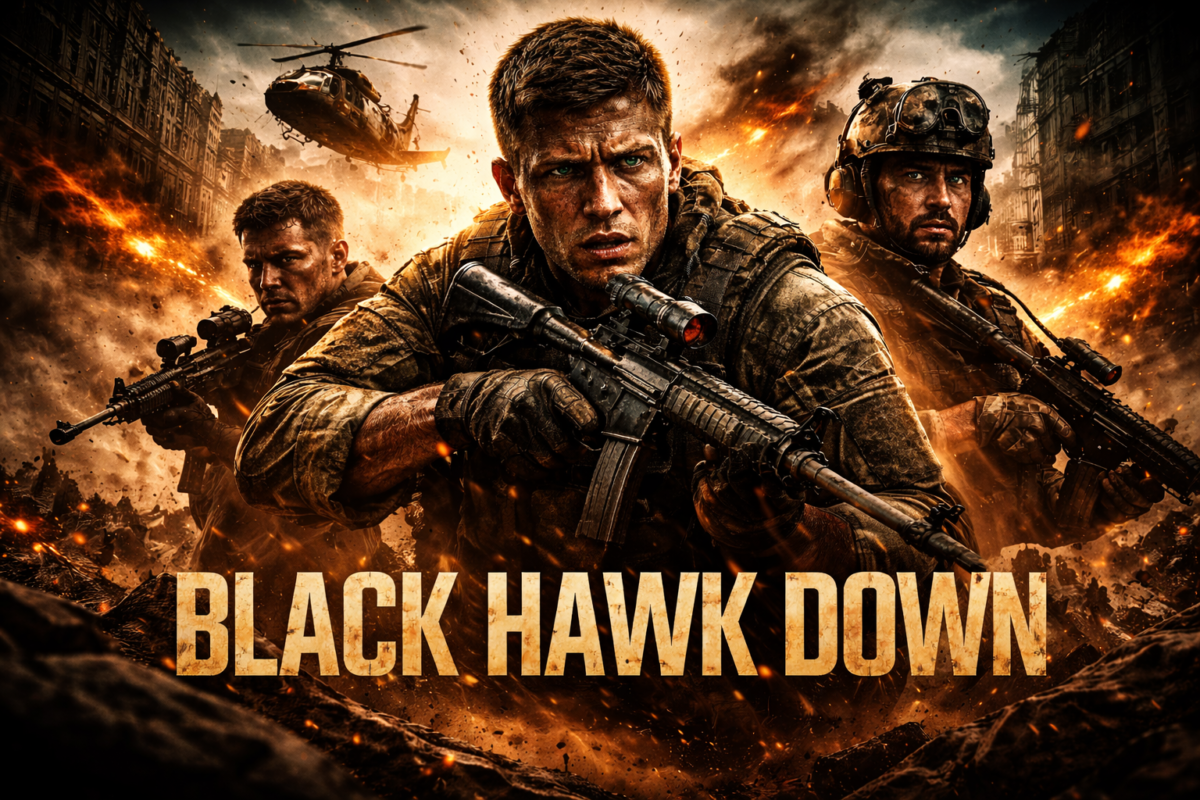
Based on a true story, Ridley Scott’s compelling military movie Black Hawk Down was released in 2001.

What is it about?

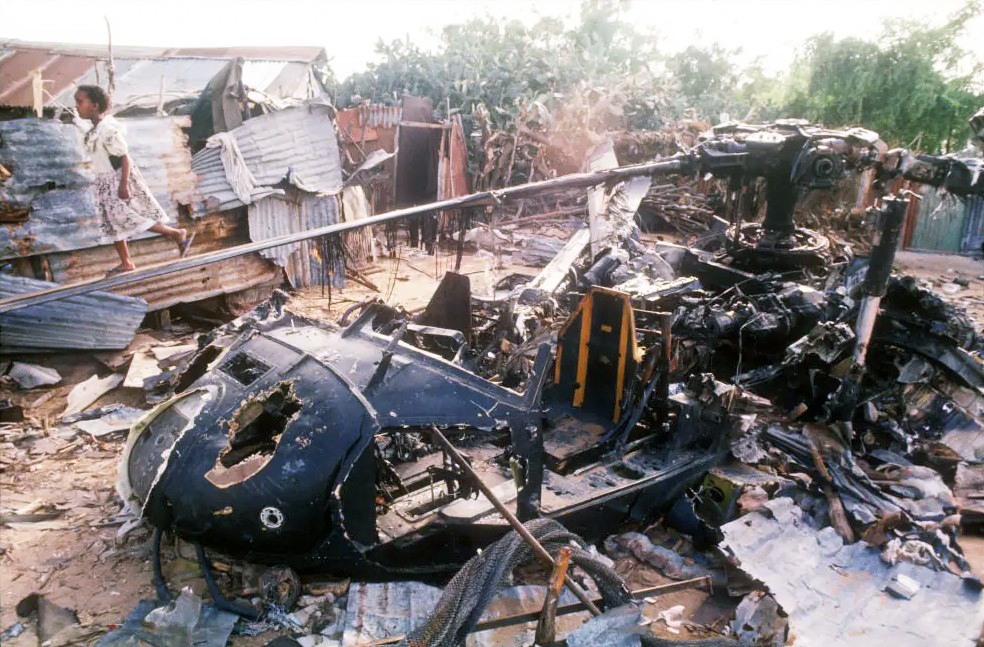
The 1993 U.S. military raid in Mogadishu, Somalia, during the Battle of Mogadishu, is shown in the film. After two Black Hawk helicopters are shot down, what was meant to be a swift mission to apprehend warlord lieutenants devolves into a bloody urban conflict.
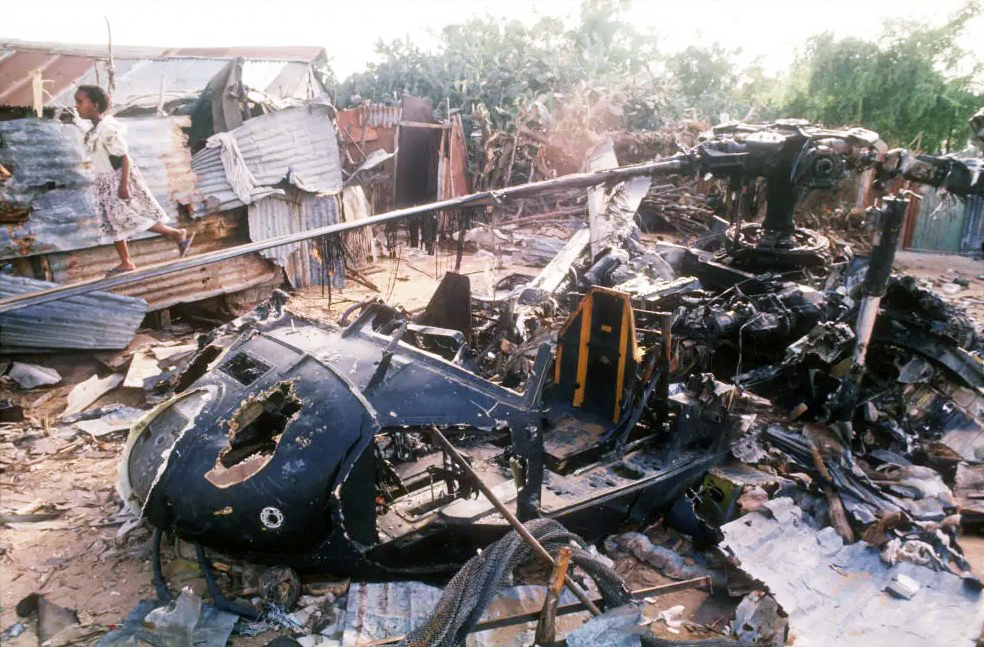
black-hawk-down - choper

Main Cast

Josh Hartnett
Ewan McGregor
Eric Bana
Tom Hardy (early role)
Orlando Bloom

https://designerchoicevja.blogspot.com/

Why it’s well-known

incredibly lifelike battle scenarios
Strong, nearly instantaneous narration

demonstrates the violence and complexity of urban combat.
Strong emphasis on military fraternity

Awards

Won 2 Academy Awards (Best Film Editing & Best Sound) at the Academy Awards

Impact on the Real World

Following Somalia, the events depicted had an impact on U.S. military intervention plans and foreign policy. The actual fight turned into one of the most researched modern warfare situations.

The movie is based on Mark Bowden’s book Black Hawk Down, which gives a thorough description of the soldiers and the mission.

The Real Story Behind Black Hawk Down

The film is based on an actual military operation that happened during the Battle of Mogadishu in Mogadishu on October 3–4, 1993.

Why did the United States send troops to Somalia?
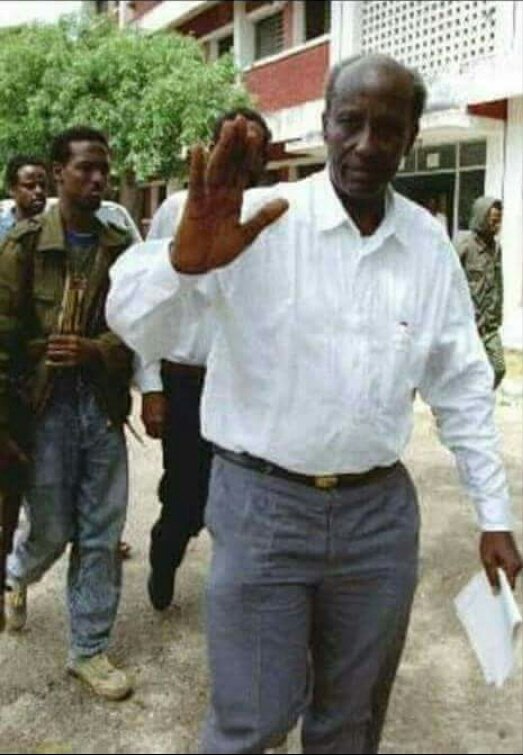
Famine and civil strife plagued Somalia in the early 1990s. Humanitarian help was provided by the United States and the United Nations.
Mohamed Farrah Aidid, a strong warlord who controlled a large portion of Mogadishu, was attacking UN forces. The United States started a mission to apprehend his senior leaders.
Mohamed Farrah Aidid

The Purpose

October 3, 1993 – Soldiers from the Delta Force and U.S. Army Rangers were dispatched to apprehend Aidid’s lieutenants.

The strategy was straightforward

Go into the city,  Attack targets , Leave in less than an hour , What went wrong

Everything was altered when

RPGs were used by Somali militia militants to bring down two Black Hawk helicopters.
There was fierce fighting at the crash locations.

The Conflict

Overnight, American soldiers were stranded in enemy territory.
Thousands of armed militia men confronted them.
Rescue was quite challenging due to communication breakdowns and urban pandemonium.
Two soldiers, Gary Gordon and Randy Shughart, were given the Medal of Honor for their valor after they willingly went to guard a crash site.

Deaths

18 American soldiers were killed and 73 injured.
Hundreds (perhaps more than 1,000) Somali soldiers and civilians were slain. (Black Hawk Down)

Worldwide Shock

Worldwide, footage of dead American soldiers being hauled through the streets was aired. The United States was greatly outraged by this.

US Aftermath

The United States made the decision to remove its soldiers from Somalia.
Future U.S. military decisions were significantly impacted by the conflict (greater prudence in overseas interventions).

Reality vs. Film

The majority of the movie is true, particularly the level of combat.
A few characters have been simplified or combined.

The film mostly concentrates on American soldiers, giving Somali viewpoints minimal attention.

One important lesson from the Battle of Mogadishu was

Dangers of urban warfare
Military power limitations
The significance of well-defined mission planning  (Black Hawk Down)

Black Hawk Down’s Hidden Details Were Not Shown

Although the movie Black Hawk Down is dramatic and largely true, it omits a number of crucial details about the Battle of Mogadishu.

1. The role of the UN and international forces was greater.

Although American soldiers are the main focus of the film, in actuality…

UN forces from Malaysia and Pakistan were essential to the rescue.
Malaysian armored trucks assisted in freeing soldiers who were trapped.
The number of casualties could have been much higher without them.

There is very little evidence of this international endeavor.

2. The Largely Missing Somali Civilian Perspective

Somalis are primarily depicted in the movie as armed combatants, but…..

Numerous bystanders were trapped in the crossfire.
The local militia frequently consisted of regular people protecting their communities.
The film does not adequately address the large number of civilian casualties.

3. Inadequate Mission Intelligence

The United States misjudged the circumstances…

They thought there would be little resistance.
Widespread militia mobilization was not anticipated.
Somali fighters have a significant edge due to urban terrain.

The mission was badly evaluated in addition to being unlucky.

4. Initially, No Heavy Armor

One crucial error

At first, American soldiers did not use armored vehicles or tanks.
They were therefore exposed when the helicopters crashed.
Earlier reports stated that requests for armor had been turned down.

5. The Confusion in the Battle Was Greater Than Shown

In actuality…

In small streets, units got lost.
Communication systems frequently broke down.
For hours, several soldiers were alone and unsupported.

It was even more chaotic than the movie depicts. (Black Hawk Down)

6. “Mogadishu Mile” Was More Cruel

The film depicts soldiers fleeing to safety, but…

It took place in the midst of continuous fire.
Many were already hurt and worn out.
It was lengthier and less structured than what was seen.

7. There Are Few Details About Delta Force

Delta Force and other elite units had…

More intricate responsibilities than those depicted
Coordination and classified tactics
Certain acts are still not entirely public.

8. There Were Serious Political Repercussions

The United States changed its foreign policy strategy.
Leaders started to use greater caution while making interventions.
Decisions in subsequent confrontations were impacted by this incident.

9. Mohamed Farrah Aidid Was Never Apprehended

In spite of the mission….

Mohamed Farrah Aidid was still at liberty.
Later on, he proclaimed himself Somalia’s president.
The mission’s primary goal was ultimately unsuccessful.

10. The Stories of Real Soldiers Are Even More In-Depth

Included in Mark Bowden’s book are…

Personal anxiety, perplexity, and ethical quandaries
Errors and mistakes made by people
After the war, emotional anguish

Many of these human aspects are simplified in the film. (Black Hawk Down)

The action and bravery are depicted in the movie, however the true narrative also revolves around

Inaccurate calculations
Suffering of civilians  (Black Hawk Down)

International collaboration
Political repercussions
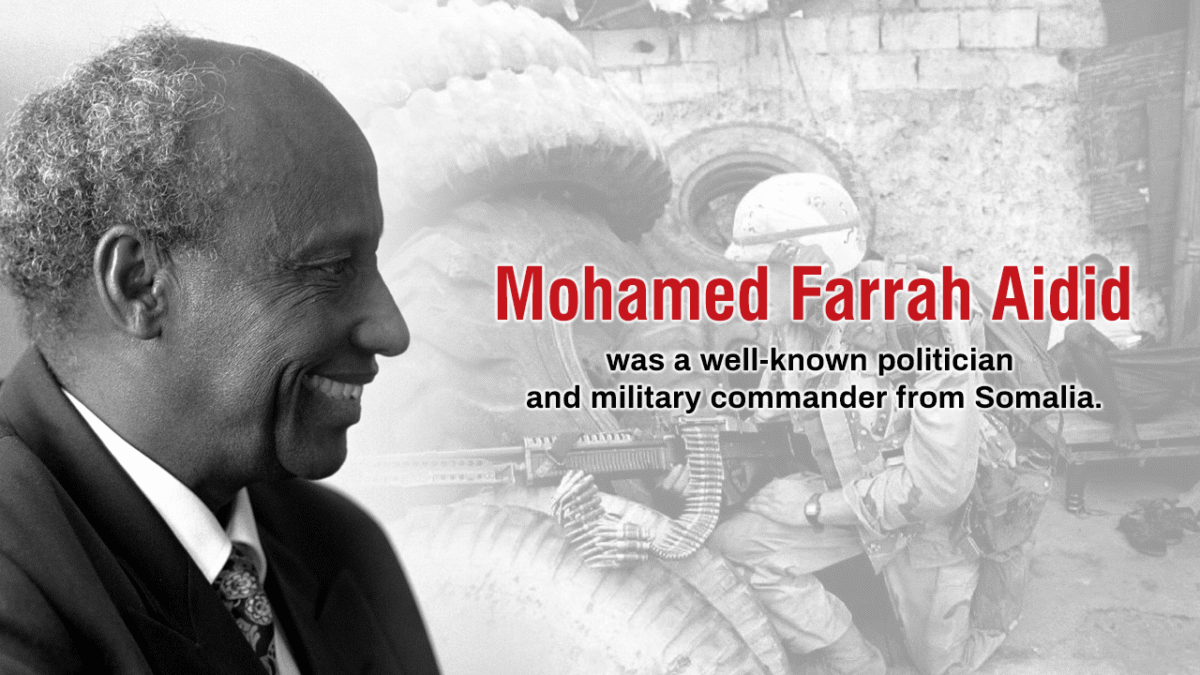
Mohamed Farrah Aidid

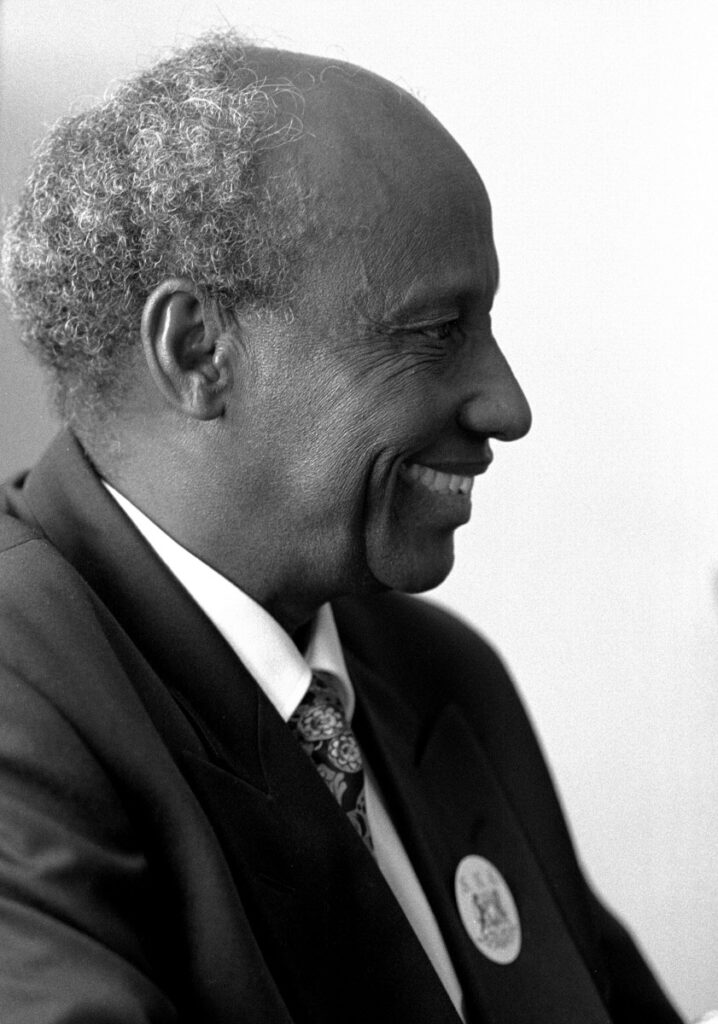
Mohamed Farrah Aidid (1934–1996) was a well-known politician and military commander from Somalia. He had a big impact on Somalia’s complicated late 20th-century political environment. Aidid became well-known in the 1980s as a leading member of the Somali National Movement (SNM), a rebel organization opposing President Siad Barre’s government.

https://designerchoicevja.blogspot.com

Mohamed Farrah Aidid

When Barre’s government fell in 1991 and Somalia fell into anarchy, Aidid’s power and influence grew in the early 1990s. A civil war sprang out as several groups and warlords fought for dominance. In the capital city of Mogadishu, Aidid became one of the strongest warlords.

UNOSOM, a United Nations peacekeeping force, was sent to Somalia in 1992 with the goal of restoring order and delivering humanitarian supplies. However, there were a number of violent clashes between Mohamed Farrah Aidids soldiers and the UN forces. The most prominent event was the October 3–4, 1993, Battle of Mogadishu, popularly referred to as the “Black Hawk Down” incident. Both sides suffered heavy casualties as a result of the intense gunfight between Aidid’s forces and Delta Force soldiers and U.S. Army Rangers.

As international pressure mounted on Aidid’s faction, the Battle of Mogadishu signaled a sea change in his power. A resolution to apprehend and prosecute Aidid for his involvement in impeding humanitarian efforts was passed by the UN Security Council in 1995.

But before going on trial, Mohamed Farrah Aidid passed away on August 1, 1996. After having a heart attack in Mogadishu, he was sent to a Saudi Arabian hospital for treatment, where he eventually died. Hussein Mohamed Aidid, Aidid’s son, succeeded his father as the faction’s head following his passing.

A prominent character in Somali history, Mohamed Farrah Aidid is best known for his participation in the country’s civil war and his opposition to the UN’s presence there.

Rise to Power

Born in 1934 in Beledweyne, Somalia, Aidid is a member of the Hawiye tribe. He first worked for President Siad Barre’s administration as a police officer, but political and clan-based conflicts caused him to turn against Barre.

Aidid rose to prominence as a leader of the Somali National Movement (SNM), a rebel organization mainly made up of Isaaq clan members in northern Somalia. The SNM sought to topple the Barre government and give the Isaaq people their own sovereign state.

USC formation

Aidid established the United Somali Congress (USC), a political and military group, following the fall of Barre’s administration in 1991. The USC sought to unify different clans under a single banner and close the power gap in Somalia. However, internal strife and factionalism at USC caused more unrest.

Control of Mogadishu

In 1991, Mohamed Farrah Aidid’s group took control of Somalia’s capital, Mogadishu. He asserted his power over other groups and set up a de facto government in the city. But his reign was marked by ineffective governance and violence.

Humanitarian Crisis and UN Conflicts

The United Nations sent peacekeeping troops to Somalia in the early 1990s while the country was experiencing a serious humanitarian crisis. The Battle of Mogadishu in 1993 was the result of fighting between Aidid’s forces and UN forces. American soldiers lost their lives in the tragedy, which also brought attention to the situation in Somalia on a global scale.

Diplomatic Efforts and International Pressure

Aidid faced increasing international pressure, including sanctions and attempts to capture him, as a result of his attacks on UN forces and obstruction of humanitarian aid.

Death and Aftermath

Mohamed Farrah Aidid died of a heart attack on August 1, 1996. Factional conflict persisted in Somalia after his passing, and his son Hussein Mohamed Aidid took on a leadership position within their group. With numerous warlords and factions fighting for control, the situation in Somalia remained chaotic.

https://rapidknowledge.in

Following the death of Mohamed Farrah Aidid, Somalia continued to experience significant instability, characterized by ongoing factional conflict and the emergence of new power struggles as various warlords vied for dominance. His son, Hussein Mohamed Aidid, assumed a leadership role, yet the absence of effective governance perpetuated the humanitarian crisis and violence throughout the region.