

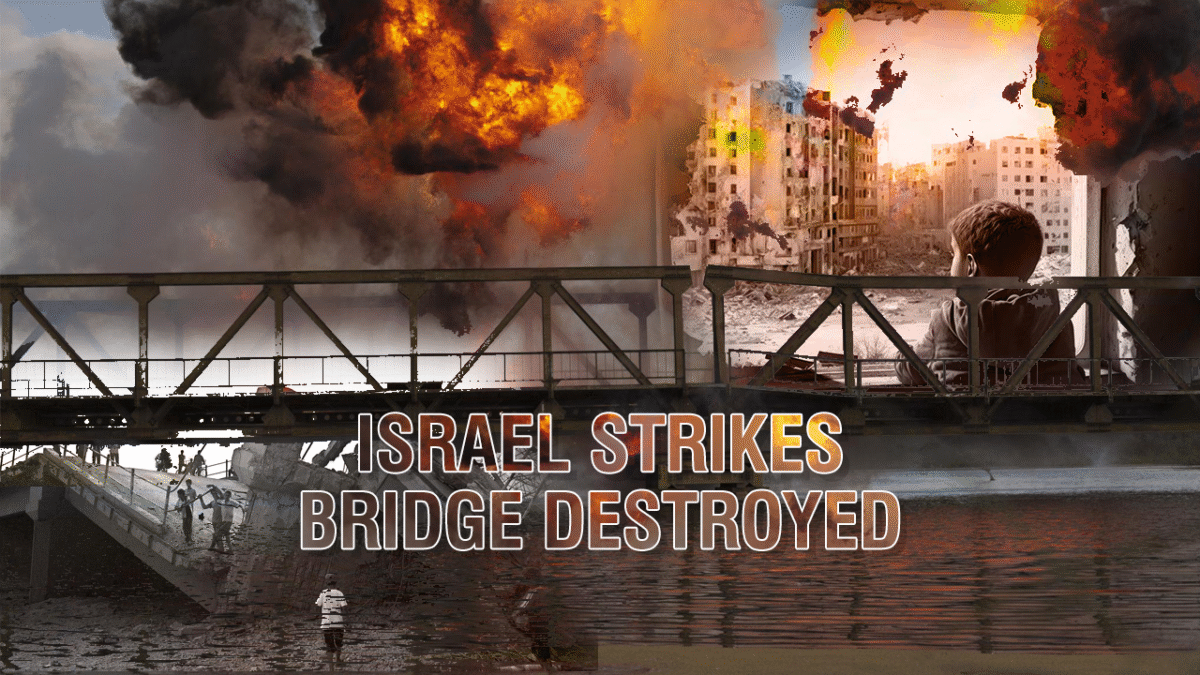
Israeli forces blasted many important bridges in southern Lebanon, notably the Qasmiyeh Bridge, a vital crossing over the Litani River, around March 22, 2026.
https://designerchoicevja.blogspot.com/
Tyre and other southern regions of Lebanon were cut off from the rest of the country by the strike, which also interfered with relief and transportation lines.
Israel reportedly targeted several bridges and crossings rather than just one. (southern Lebanon)
The reasons behind Israel’s actions
Stop the movement of Hezbollah (fighters, weapons, supplies)
In southern Lebanon, establish a “security buffer zone.”
Minimize assaults on Israel’s northern region (southern Lebanon)
Effects on the general public – southern Lebanon
In Lebanon, more than a million people are displaced.
Entire areas without access to gasoline, food, or medical care
After bridges were destroyed, cities like Tyre were partially cut off.
A larger image – southern Lebanon
This is a component of the escalation of the Israel-Hezbollah conflict in 2026, which started in early March and includes: airstrikes throughout Lebanon
Southern Lebanon’s ground operations
Hezbollah’s rocket assaults on Israel
Indeed, Israel bombed bridges in southern Lebanon as part of a larger military plan during the continuing conflict with Hezbollah.
Although the strikes are strategic (they hamper military supplies), they have serious humanitarian repercussions.
The strategic significance of the Litani River
The Litani River flows all the way across Lebanon before emptying into the Mediterranean Sea to the west.
It is located between 20 and 30 kilometers north of the border between Israel and Lebanon.
With few crossing places (bridges), the river creates a natural defense line.
Controlling movement equates to controlling crossings.
Military Significance
1. Line of the Buffer Zone
Resolution 1701 was passed by the UN following the Lebanon War in 2006.
Hezbollah should not operate south of the Litani River, according to the statement.
As a result, the river served as a de facto military border.
2. Preventing Weapons and Fighters from Moving
Crucial supply routes are the bridges that span the Litani.
Destroying them
slows down or stops Movement of Hezbollah troops
interferes with the movement of weaponry from the north to the south
restricts reinforcement in times of conflict
Because of this, airstrikes frequently target river bridges.
3. Northern Israel’s gateway
The frontline area close to Israel lies south of the Litani.
If this region is under the control of hostile troops, they are
Nearer to towns in Israel
Capable of more effortlessly launching missiles or raids
Israel’s security depth is increased by maintaining military north of the Litani.
Impact on Civilians and Logistics
Major cities like Tyre are connected to inland Lebanon via the river’s bridges.
When bridges are demolished Aid and evacuation channels are blocked off to civilians

Fuel, food, and medication supplies are interrupted.
Thus, it serves as both a civilian lifeline and a military choke point.
Easy Analogy
Consider the Litani River as Lebanon’s “line of control”
Safer, supply zones are located north of it.
The active conflict zone lies south of it.
The entire battlefield flow is controlled by the person in charge of crossings across that line.
Strategically, the Litani River is important since it is
An organic protective barrier
A military/political border (after the war in 2006)
A vital route for logistics (bridges are lifelines)
A safeguard for northern Israel
Why does Israel strike bridges in particular?
1. Israel has a long-standing military justification for attacking bridges in war areas, such as those spanning the Litani River.
It’s about managing movement, slowing the enemy, and reshaping the battlefield; it’s not random.
You cannot readily traverse a river without bridges, which are choke points.
These crossings are used by organizations like Hezbollah to
Fighters, move!
Carry weapons
bolster the front lines
When the bridge is destroyed, motion slows down or stops entirely.
2. Supply Line Disruption (Logistics Warfare)
Logistics (food, ammunition, and fuel) play a major role in modern warfare.
Supply routes from northern Lebanon to the south are connected by bridges. (southern Lebanon)
By building bridges, Israel hopes to
Disrupt supply chains
Separate front-line units
Minimize long-term assaults (such as rocket firing)
Over time, a lack of supplies results in a diminished ability to battle.
3. Establish a Buffer Zone
In the past, Israel has made an effort to keep adversarial forces away from its border.
A crucial frontline is located south of the Litani.
Bridge destruction is beneficial:
Stop reinforcements from heading south.
Keep combatants to the north of the river.
It successfully establishes a zone of regulated separation.
4. Slow Down Any Ground Threat
If a ground escalation happens
Bridges are essential for quick troop movement
Without them,
Movement becomes slow, exposed, and predictable
Israel gains a tactical and temporal edge as a result.
5. Low Direct Engagement, High Impact
Airstrikes against infrastructure:
Steer clear of direct conflict amongst soldiers.
Attack crucial locations with fewer soldiers
It is a means of undermining the adversary without launching a full-scale invasion.
Controversial – Effects on Citizens
Civilians also use bridges
Routes of evacuation
Food and medication delivery assistance
Thus, strikes can
Separate towns
deteriorate humanitarian circumstances
For this reason, such acts are discussed and condemned on a global scale.
Israel attacks bridges due to the following reasons– southern Lebanon
Crucial choke spots
vital to the movement and logistics of the enemy
The secret to managing land without inhabiting it
Control the flow of the battlefield by destroying the bridges