

The Living Bridges

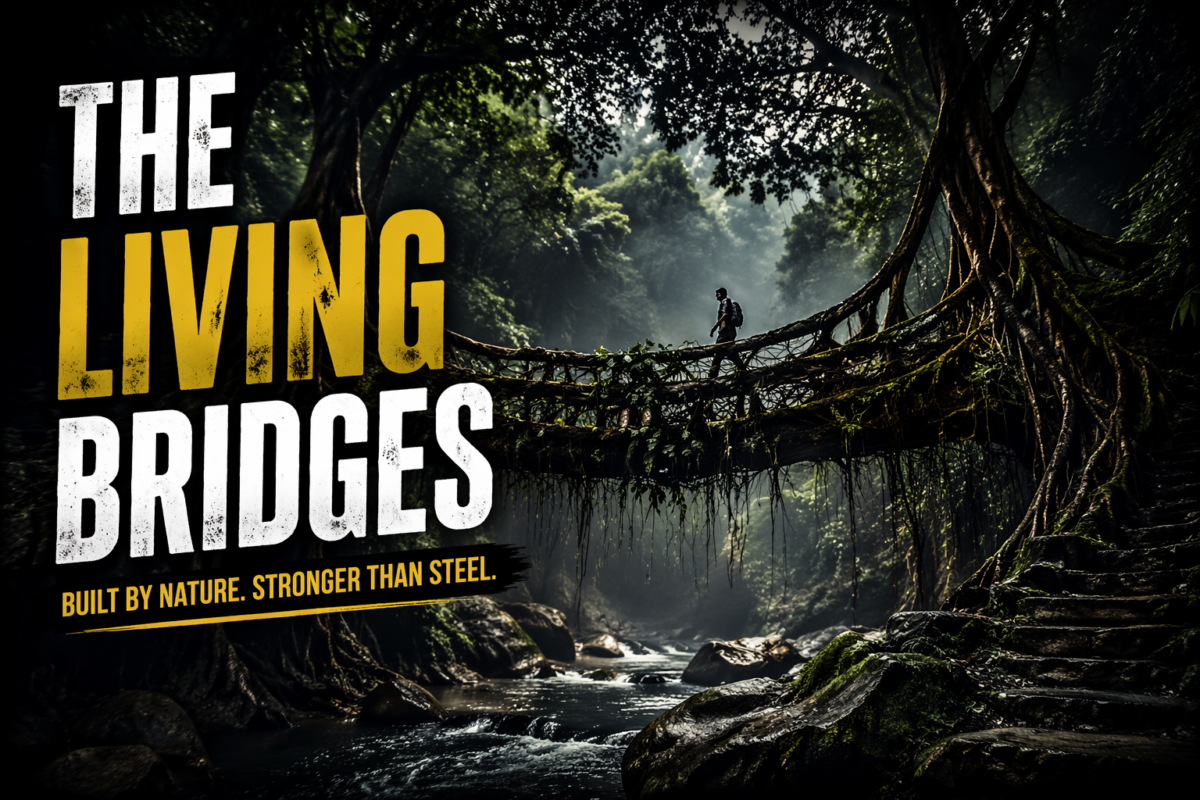
The Living Bridges are intriguing and one-of-a-kind constructions made by controlling the development of tree roots over time. The northeastern area of India, specifically the state of Meghalaya, is home to these bridges.

Creation

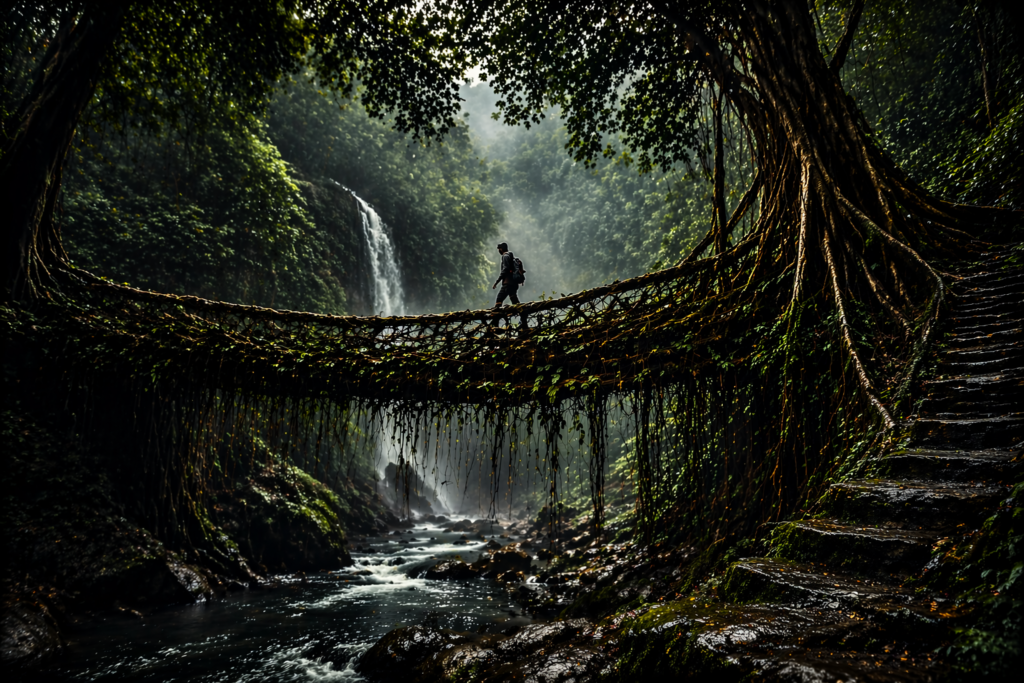
The roots of the Ficus elastica tree, also referred to as the rubber tree or the Indian rubber fig, are used to construct the living bridges. These trees’ roots have the amazing capacity to develop and get stronger over time. The roots can spread across rivers, streams, and other bodies of water because the villagers direct and train them to grow in a specific way.

Building Procedure

The first step in building a living bridge is to guide young rubber trees’ aerial roots toward opposing sides of a river or stream. After that, these roots are encouraged and led to blend and grow together. The roots continue to develop and fortify over a number of years, creating a strong living bridge. It may take ten to twenty years or longer to construct a living bridge. (The living bridges)

Strength and Durability

The living bridges can sustain the weight of several people at once and are extremely resilient. Heavy rains, flooding, and erosion are just a few of the natural factors that the roots can survive as they develop and mature.

Lifespan

The durability of these bridges is one of their most notable features. Living bridges, in contrast to traditional wooden or metal bridges, keep expanding and getting stronger over time. In Meghalaya, some bridges are thought to be more than 500 years old. (The living bridges)

Advantages for the environment

There are several environmental benefits to using live bridges. Relying on living trees and their roots eliminates the need to cut down trees or use non-renewable building materials. Additionally, the living bridges support biodiversity and help maintain the local ecosystem. (The living bridges)

India’s living bridges are not only useful buildings but also priceless cultural and natural assets. They demonstrate the local people’ inventiveness and creativity and serve as evidence of the peaceful coexistence of humans and the natural world.

It is now a popular tourist destination. Homestays opened as visitors started to pour in. Locals constructed tents and led tourists into the jungle’s hills. Everything from bottled drinks to crisp packets was stacked on makeshift stands. When Syiemlieh visited Laitkynsew, a village south of Tyrna, in March, she observed the locals pulling, twisting, and weaving fig tree aerial roots on bamboo scaffolding to construct a triple bridge. Two of the layers run parallel to one another, just like in a double-decker bridge, while the third root layer is slanted across the riverbank. “Maybe they thought that three layers can attract more tourists,” Syiemlieh explains.

The amazing live root bridges in the northeastern state of Meghalaya, particularly in the vicinity of Cherrapunji and Mawlynnong, are typically referred to as “living bridges.”
The Living Bridges

https://designerchoicevja.blogspot.com/

What Are Living Bridges?

Living bridges are naturally occurring structures made of tree roots rather than steel or concrete. Over time, rubber tree roots are guided across rivers and streams by indigenous societies to create sturdy, walking bridges.

Derived from Ficus elastica roots
Completely natural and environmentally friendly
As they get older, they get stronger.

How Are They Made?

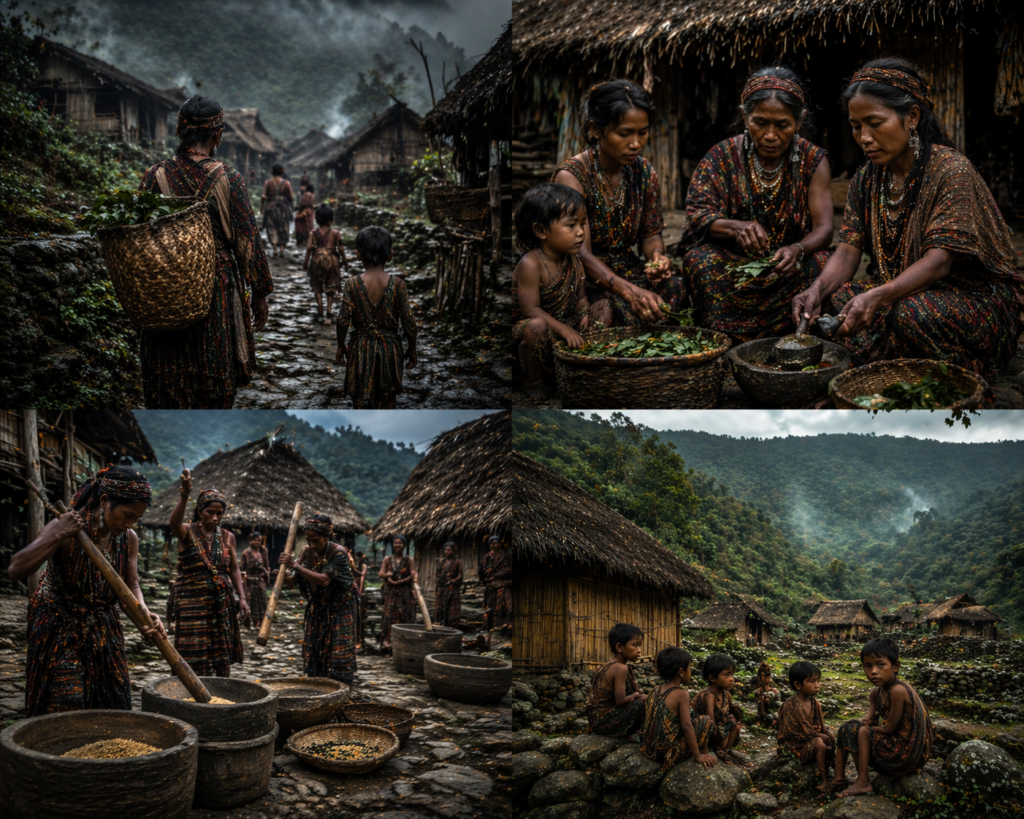
This method has been established over generations by local tribes, namely the Khasi people
Khasi

Bamboo scaffolding is used to guide roots.
They are aimed over gaps or rivers.

Roots intertwine and strengthen over a period of ten to twenty years.
They eventually get enough strength to help others.

Some bridges are still in use after more than a century!

Well-known Living Bridges

The Double Decker Living Root Bridge An uncommon two-story bridge that is a popular tourist destination

The Ummunoi Root Bridge is renowned for its length and scenic beauty.

The Reasons They Are Important

Ideal for regions with a lot of rain (Meghalaya is among the wettest places on Earth).

They don’t decay as quickly as wooden bridges do.

A natural wonder and a symbol of sustainable engineering and harmony with nature

Living bridges are a potent illustration of how people may cooperate with nature rather than oppose it. They are living, expanding ecosystems rather than merely structures.

https://rapidknowledge.in/2026/04/03/https-rapidknowledge-in-superfood/

Charles Sobhraj – The suave ‘Bikini Killer’

Charles Sobhraj, an infamous criminal and serial killer, was born Hatchand Bhaonani Gurumukh Charles Sobhraj. In Saigon, French Indochina (now Ho Chi Minh City, Vietnam), he was born on April 6, 1944. Sobhraj, who is of Vietnamese and Indian ancestry, earned the nicknames “The Serpent” and “The Bikini Killer” for his illegal actions and methods.

Criminal Behavior

In the 1970s, Sobhraj became well-known throughout the world for a number of crimes he perpetrated in Asia, mostly in Thailand, Nepal, and India. He was notorious for preying on young Western visitors, frequently making friends with and controlling them before robbing or killing them. Although the precise number may be greater, it is estimated that he is accountable for at least 12 deaths.

Charles Sobhraj

Charles Sobhraj Modus Operandi

Sobhraj employed a variety of techniques, such as charm, drugs, and false identities, to trick his victims. Usually, after drugging and robbing his victims, he would strangle them to death and dispose of their remains. He was adept at eluding law enforcement and regularly assumed several identities.

Sobhraj would frequently prey on young, gullible tourists, especially backpackers. After winning their trust and charming them, he would take advantage of them for his own benefit. Sobhraj was notorious for giving his victims sedatives like Valium before robbing them of their possessions or extorting money.

https://designerchoicevja.blogspot.com/

Arrests and Detention

Eventually, Sobhraj’s illegal actions caught up with him. He was detained in India in 1976 and found guilty of killing Charmayne Carrou, a French visitor. But in 1986, he was able to break out of prison and was on the run for a number of years. In 2003, he was finally captured in Nepal and found guilty of killing Connie Jo Bronzich, an American tourist.

charles shobraj dark mood

Media Attention and Controversy

Sobhraj became a fascinating figure due to his crimes and captivating personality, which attracted a lot of media attention. Books, documentaries, and even a 2021 television series called “The Serpent” that dramatized his crimes and capture have all focused on his case.

Incarceration and Court Cases

Charles Sobhraj is presently serving several life sentences in Nepal for his crimes as of the September 2021 deadline to the best of my knowledge. He is still a well-known prisoner despite being denied release.

Early Life

In Saigon, French Indochina (now Vietnam), Charles Sobhraj was born to a Vietnamese mother and an Indian father. His early years were spent in a number of nations, including France, India, and Vietnam. From an early age, he gained a reputation as a cunning scam artist and small-time crook.

Examining and Capturing

Law enforcement organizations in a number of nations became aware of Sobhraj’s illegal operations. Interpol and several police agencies pursued him. His deeds eventually caught up with him, and he was imprisoned several times in several nations, including Nepal, Thailand, and India.

Debates and Rumors

Charles Sobhraj has been the subject of numerous disputes and rumors. Some others think he was part of a wider criminal network or had accomplices. Additionally, because Sobhraj was known to falsify identities and data, there have been disagreements over the precise number of victims he is responsible for.

Biographical Narratives

Charles Sobhraj’s illegal acts have been the subject of numerous books and articles. “Serpentine” by Thomas Thompson, “The Life and Crimes of Charles Sobhraj” by Richard Neville, and “The Serpent and the Flower” by Clark Howard are a few noteworthy pieces.

Although Sobhraj’s life and crimes have attracted a lot of attention, it’s crucial to understand that the specifics of his actions and intentions may differ based on various sources and interpretations. The media has sensationalized and conjectured about the circumstances surrounding his crimes and his eventual capture.

https://rapidknowledge.in/


Disclaimer

This content is created for awareness & knowledge purposes only and does not promote or glorify violence or illegal activities.

This content is not intended to harm, defame, or offend any individual, group, or community. The creators do not endorse or promote illegal activities.

Viewer discretion is advised

We do not encourage or support any form of criminal activity.