
Charles Ponzi

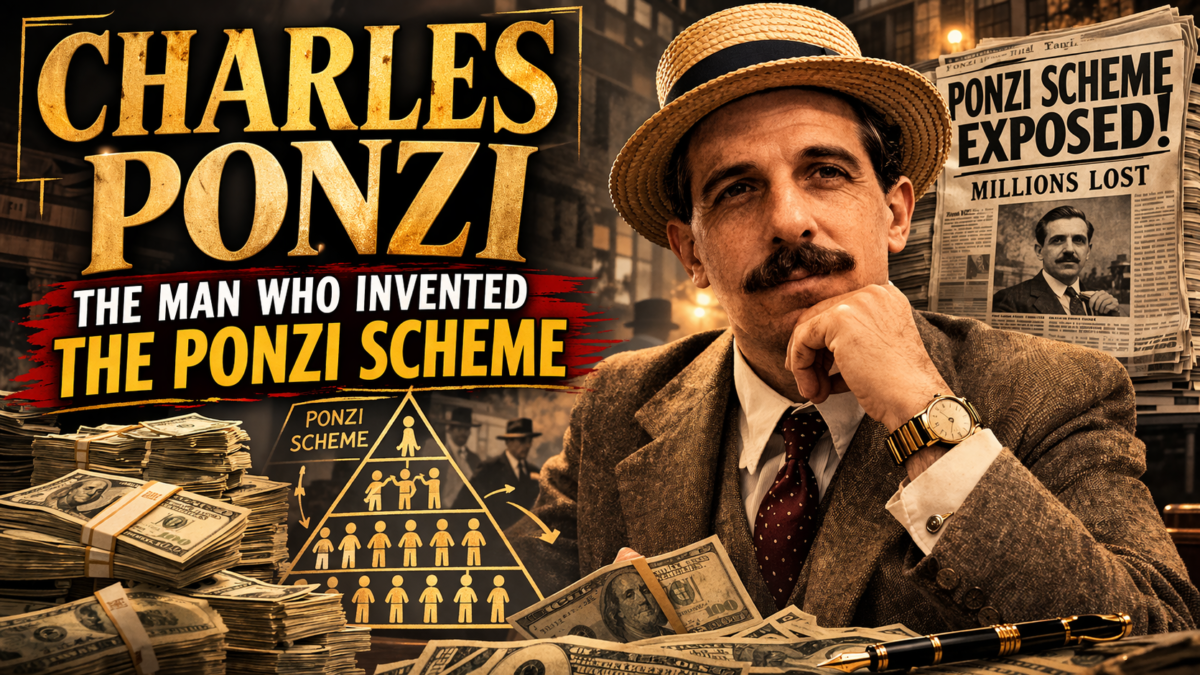
Italian-born con artist and swindler Charles Ponzi (1882–1949) gained notoriety for running a fraudulent investment scam that became known as the “Ponzi scheme.” His name has come to be associated with this kind of deception.

Early Years

On March 3, 1882, Ponzi was born in Lugo, Italy. After moving to the US in 1903, he worked odd jobs for a while before committing crimes.

The Scheme

In Charles Ponzi’s fraudulent scam, investors were promised large returns on their investments in international reply coupons. He asserted that he could make substantial gains by taking advantage of variations in currency exchange rates. In actuality, though, he was setting up a traditional pyramid or Ponzi scheme by using the funds of new investors to settle debts owed to previous investors.

Quick Growth

In the early 1920s, Ponzi’s scam became incredibly popular. He established the Securities Exchange Company to attract investors and promised incredibly high returns on investments in a short period.

Decline

When financial experts and investigative journalists began to doubt the viability of Ponzi’s operation, the scheme started to fall apart. Eventually, an investigation by the authorities exposed the scheme’s bogus character.

Legal Issues

Charles Ponzi was detained in August 1920 on suspicion of mail fraud. He was found guilty and given a prison term. For his misdeeds, he was imprisoned for a number of years.

Legacy

Since then, the phrase “Ponzi scheme” has been used to refer to any fraudulent investment operation in which investors receive returns from the money given by later investors rather than from actual earnings. After Charles Ponzi, others have engaged in Ponzi schemes, causing victims to suffer large financial losses.

Charles Ponzi

Returns on Investment

Charles Ponzi promised investors lavish returns of 100% in 90 days or 50% in 45 days. These returns were significantly higher than what could be achieved with respectable investment strategies.

First Success

Many investors were first drawn to Ponzi’s scheme by the promise of large returns. In order to create the appearance of profitability and draw in more participants, he used the funds from new investors to settle debts owed to previous investors.

The scheme’s scale

Charles Ponzi was making a lot of money from investors at the peak of his business. In a matter of months, he is thought to have raised about $15 million, or more than $200 million in today’s currency.

Journalist’s exposé

After looking into Charles Ponzi’s business, financial journalist Clarence Barron wrote a number of pieces that exposed the scam in the Boston Post. Barron’s investigation was crucial in exposing Ponzi’s dishonest practices.

The King of Fraud

https://designerchoicevja.blogspot.com/

Bankruptcy and Collapse

When Charles Ponzi was unable to satisfy the growing demands of investors looking to withdraw their money, his scam fell apart in August 1920. Investors lost the majority of their money when the Securities Exchange Company filed for bankruptcy.

Court Cases and Detention

Charles Ponzi was accused of several instances of mail fraud following his detention, and he was subject to legal action. He was given a prison sentence after entering a guilty plea to federal mail fraud charges.

Repercussions and Impact

Investor protection and financial regulation have been permanently impacted by Charles Ponzi’s fraud. Reforms in securities regulation resulted from his deception, which highlighted the need for more stringent supervision and protections in the financial sector.

The prevalence of Ponzi schemes

Even though Ponzi’s name is associated with fraud, Ponzi-like scams have persisted over time, preying on gullible investors. Participants suffer financial losses as a result of the schemes’ frequent demise.

Cultural and Media Allusions

Books, documentaries, and movies that examine Ponzi’s ascent and decline include Mitchell Zuckoff’s “The Ponzi Book” and Robert De Niro’s portrayal of Ponzi scheme mastermind Bernie Madoff in the movie “The Wizard of Lies”.

Death and Later Life

Following his release from prison, Ponzi had more legal issues and was incarcerated for offenses unrelated to his initial plan. In 1934, he was finally exiled to Italy. On January 18, 1949, Charles Ponzi passed away in poverty in Rio de Janeiro, Brazil.

Due diligence and prudence are crucial while making financial decisions, as demonstrated by Charles Ponzi’s scheme and the ensuing legal ramifications. His narrative serves as a warning to investors and a reminder of the possible dangers connected to fraudulent schemes.

One of the most well-known instances of financial fraud in history is still Charles Ponzi’s scheme. His name serves as a warning to investors and has come to be associated with dishonest investment schemes.

https://rapidknowledge.in/2026/03/26/https-rapidknowledge-in-charles-sobhraj/
REGICIDE

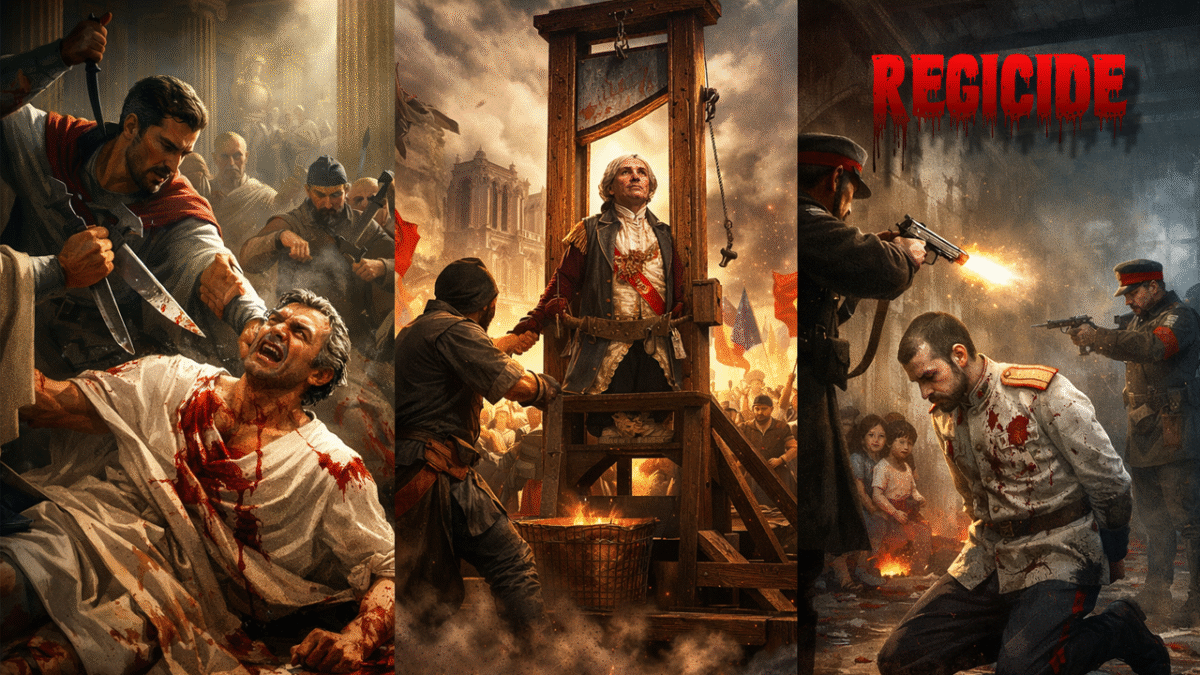
The term “regicide” describes the murder of a king or other ruler, usually with the goal of depriving them of their position of authority.

Historical Context

Regicide has taken place in many political and civilizational contexts throughout history. A number of factors, such as political turmoil, insurrection, succession issues, religious conflicts, and personal grudges, have led to the assassination of monarchs and other rulers.

Methods

Assassination, poisoning, execution, and staged accidents are just a few of the ways that regicide can be committed. The circumstances, incentives, and resources at the offenders’ disposal frequently influence the strategy selected.

Notable Examples

Regicide has occurred frequently throughout history, and some of these incidents have had a major impact on how cultures and nations have developed.

Julius Caesar

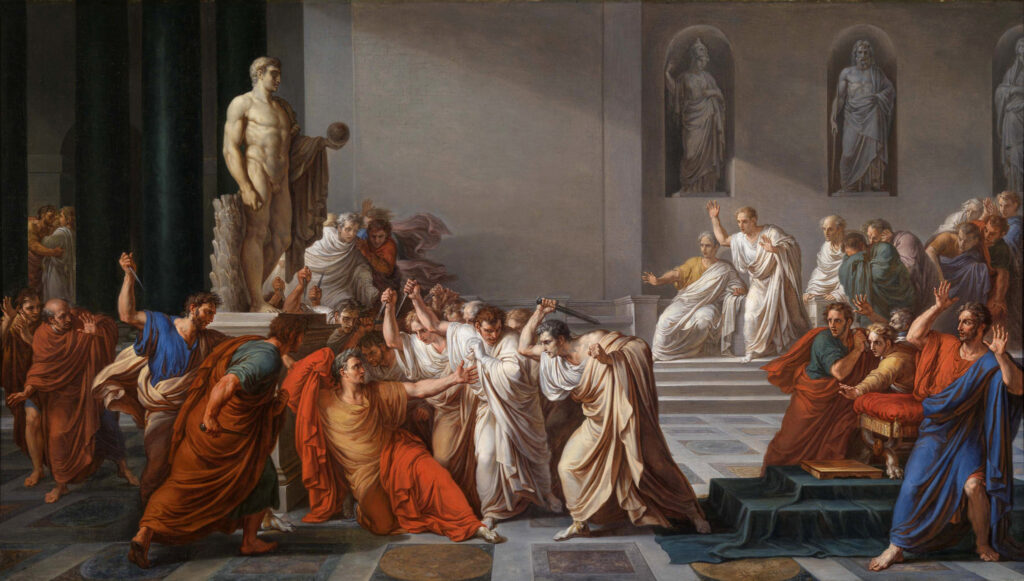
One of the most well-known cases of regicide in ancient history was the assassination of Julius Caesar in 44 BCE by a group of Roman senators led by Brutus and Cassius. Rome went through a period of political unrest and civil strife after Caesar’s death. (regicide)

Julius Cesare

https://designerchoicevja.blogspot.com

Charles I of England

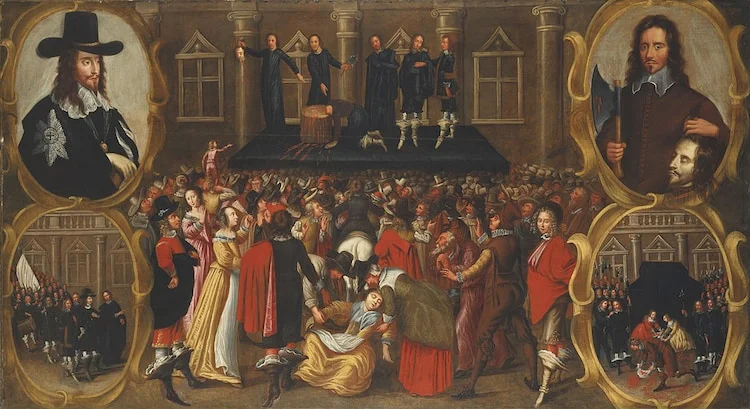
Following his defeat by Oliver Cromwell’s parliamentary armies during the English Civil War, Charles I was beheaded in 1649. For a short while, known as the English Interregnum, his execution signaled the end of the monarchy in England. (regicide)

Louis XVI of France

After the French Republic was established and the monarchy was abolished in 1793, Louis XVI was put to death by guillotine during the French Revolution. His execution represented the fall of the previous government and the emergence of revolutionary principles. (Regicide)

Nicholas II of Russia

In 1918, during the Russian Revolution, Bolshevik rebels put Nicholas II, the country’s final Tsar, and his family to death. The Romanov dynasty came to an end with the execution, and Communist dictatorship in Russia began. (regicide)

Legal and Moral Repercussions

Regicide is frequently seen as a serious crime with grave moral and legal ramifications. It can result in instability, anarchy, and bloodshed and directly challenges the legitimacy and authority of the governing regime. Regicide carries harsh punishments, such as death or incarceration, in many countries.

All things considered, regicide is an important historical phenomena that has influenced political history and had profound effects on national stability and government. It continues to be a potent representation of revolution, resistance, and the fight for freedom and power. (Regicide)

https://rapidknowledge.in

Regicide – An Advanced View

1. The Political Theory of Regicide

The perception of regicide varies depending on one’s ideology:

A. Tyrannicide (Justifiable Murder)

According to some thinkers, if a ruler is a despot, it may be morally acceptable to kill them.

Locke, John
felt the people had the right to remove unfair leaders from power.

Aquinas, Thomas
discussed whether overthrowing a despot may be justified for the benefit of all. According to this perspective, regicide is an act of emancipation.

B. Kings’ Divine Right (Unjustifiable Crime)

James VI and me
ardent advocate of the notion that God selects kings.

According to this theory, regicide is equal to treason plus sin.

2. The Regicide of Revolution

A. occurs during revolutions.

Symbolic and public

For instance, Louis XVI of France

B.Regicide via Conspiracy

Insiders or elites with covert schemes

For instance, Julius Caesar

C. The Regicide of Dynasties

For power inside royal families

For instance, In a similar power battle, Aurangzeb imprisoned his father, Shah Jahan, rather than killing him.

d. Regicide based on ideology

Motivated by political philosophies (nationalism, communism)

Nicholas II of Russia, for instance

3. Additional Worldwide Examples

The Ancient World

Macedon’s Philip II
Alexander the Great’s father

The Middle Ages

England’s Edward II
After being ousted, possibly slain.

Early Modern Era

Sweden’s Gustav III
Famous dramatic regicide, shot at a masked ball.

The Modern Era

As monarchs fall, political assassinations persist but true regicide becomes less common.

4. Regicide Causes (Deep Analysis)

a. Power Abuse

High taxes, Oppression, Decline in popular confidence

During the French Revolution

B. Unpredictability in politics

Inadequate leadership

Observed during the English Civil War

C. Shift in Ideology

Growth of nationalism, socialism, and democracy

During the Russian Revolution

D. Struggles for Elite Power

Leaders in the military or nobles vying for power

Observed in Roman plots

5. Regicide’s Aftereffects

a. Direct Impacts

Civil war or chaos, Using a power vacuum, Murders committed in retaliation

b. Long-Term Consequences

1. Emergence of Novel Systems

Republics, Democracies, Communist nations

For instance, under Louis XVI of France, the Republic

2. Monarchy’s Strengthening

Regicide can occasionally backfire and result in more powerful rulers.

3. Symbolic Significance

Regicide conveys a strong message

“No ruler is untouchable.”

6. Regicide in Literature and Culture

A common motif in stories is regicide

Macbeth

A king is killed in order to gain power, which results in shame and demise.

The Game of Thrones

Brutal power battles are demonstrated by the deaths of several kings.

7. Contemporary Significance

Despite the fact that there are fewer kings now

Political assassinations have evolved from regicide.

Presidents and prime ministers are among the leaders who confront comparable dangers.

For instance, John F. Kennedy (similar influence but not a king)

8. Crucial Realization

Killing a ruler is only one aspect of regicide;

other aspects include…….

Power’s legitimacy

The freedom of individuals to rebel

Political system transition

It frequently signifies the end of one era and the start of a new one.