

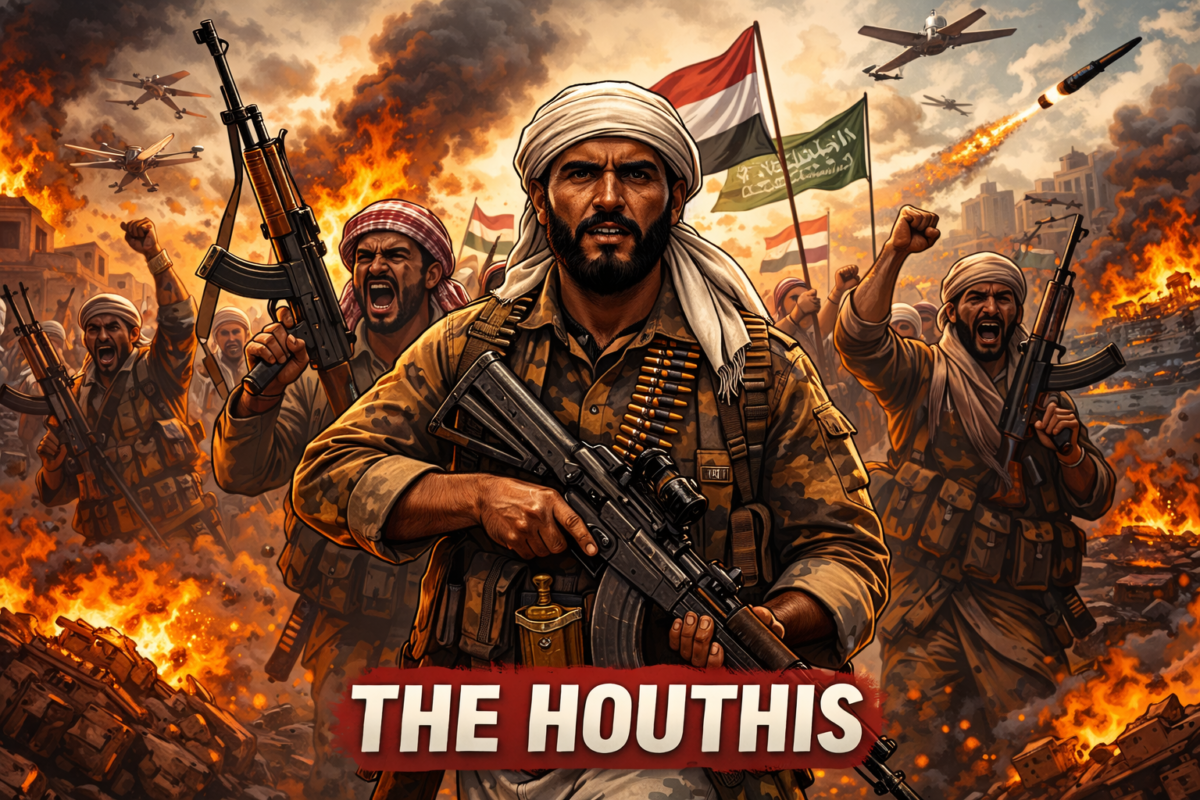
The Houthis, formally known as Ansar Allah, are a Yemeni political and militant group.
Who they are
A northern Yemeni Shia Muslim community known as the Zaydi
In honor of Hussein Badreddin al-Houthi, their founder
began as a social and religious revival movement in the 1990s.
What they turned into
became an armed rebel organization in the early 2000s.
fought against Ali Abdullah Saleh’s Yemeni administration
increased authority amid the turmoil of the Arab Spring
Significant turning point
They overran Sanaa, the capital of Yemen, in 2014 and drove out the country’s internationally recognized government.
A civil war resulted from this.
Participation abroad
In order to combat them, a coalition led by Saudi Arabia intervened in 2015. Although Iran disputes complete authority, it is often thought that Iran supports the Houthis.
Why the news is about them
They have attacked Saudi Arabia and other targets using missiles and drones.
They have recently targeted ships in the Red Sea while claiming support for Palestinians.
Their objectives
Yemen’s increased autonomy and political power
opposition to foreign influence, particularly that of the United States and Saudi Arabia
Encourage their understanding of Islam and government.
The Houthis are now more than just rebels; they are a significant force in Middle Eastern geopolitics and essentially govern a sizable portion of Yemen.
Are the Houthis backed by Iran?
Yes, Iran is often thought to support the Houthis, but the connection is not one of complete control. It’s not so much direct command as it is support plus alliance.
https://designerchoicevja.blogspot.com/
The true meaning of “Iran-backed”
Iran aids the Houthis in a number of ways, according to the majority of nations and experts.
Technology and weapons (drones, missiles)
Military guidance and training
Finance and shipping of oil
Networks for the smuggling of equipment and parts
For instance, it has been reported that Iran has supplied the Houthi military with materials and technical know-how for drones and missiles.
Additionally, there is proof that Houthi operations are supported by supplies and supply routes connected to Iran.
However, not total control
In Yemen, the Houthis (Ansar Allah) have their own regional objectives.
They decide on their own, particularly when it comes to internal politics.
Compared to organizations like Hezbollah, they are not as strictly regulated.
Iran is a key sponsor, although the Houthis are an autonomous actor with similar aims.
Why they collaborate
They are in agreement because they both disagree
United States influence in Saudi Arabia
Israel (in the most recent wars)
Indeed, Iran supports the Houthis. However, they have their own objective and are not puppets. Their collaboration is a major factor in the Yemeni conflict’s integration into a broader Middle East power struggle.
why the strikes in the Red Sea are important worldwide.
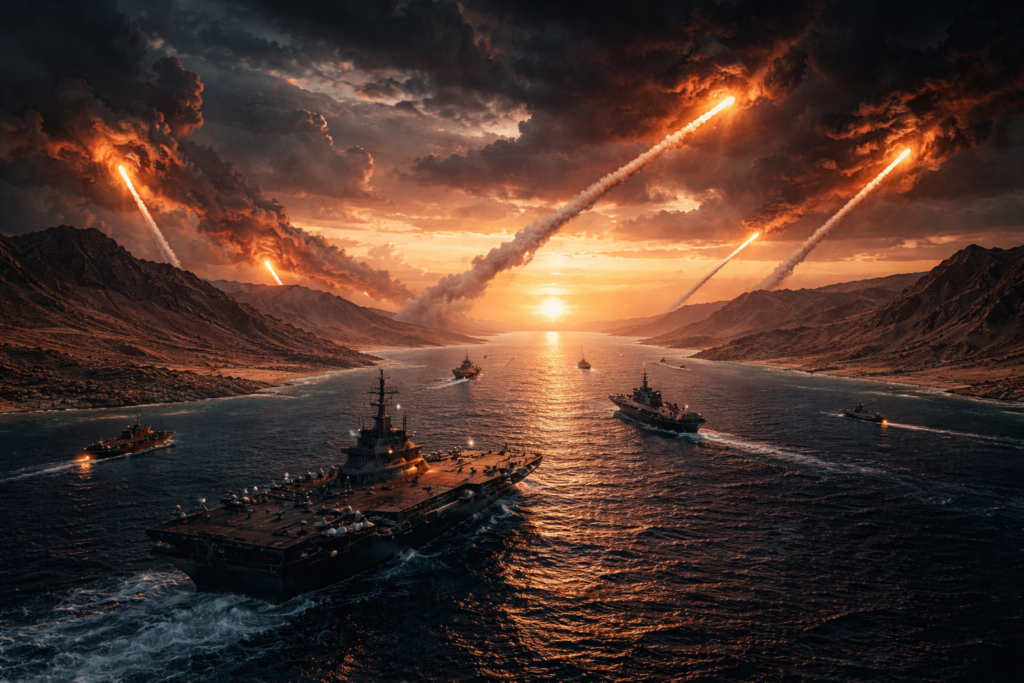
The attacks in the Red Sea are significant on a global scale because they affect trade, energy, and geopolitics.
1. An important route for international trade
One of the world’s busiest shipping lanes, the Suez Canal, is connected to the Red Sea.
Approximately 10% to 15% of world trade goes through this location.
The shortest sea route connects Europe with Asia.
Global supply chains are disrupted when ships avoid the route due to attacks.
2. Prices and shipping expenses increase
Ships use the Cape of Good Hope to reroute around Africa.
This lengthens travel times by 10 to 15 days.
Costs of fuel, insurance, and freight rise
Outcome:
Increased global prices for products
Delivery delays (food, oil, gadgets, etc.)
3. The risk of oil and energy
Transporting gas and oil from the Middle East depends on the Red Sea. Disruptions can
Increase the price of oil globally
Make the energy markets uncertain
Global economies can be shaken by even minor attacks.
4. The possibility of a larger conflict
According to the assailants, Ansar Allah, they target ships associated with Israel or its allies.
This draws in several nations
This increases the likelihood of a more extensive regional conflict.
The US and its allies are defending shipping
Iran has an indirect connection to
5. Exposure of global supply chain vulnerability
The following “chokepoints” are crucial to the world ………………
The Red Sea
Canal of Suez
Attacks highlight the vulnerability of international trading systems.
Prices and availability can be impacted globally by a conflict in one area.
6. Possible effects in the real world
More expensive imported items
Variations in fuel prices
Delays in shipping, particularly between Europe and Asia.
https://rapidknowledge.in/2026/04/01/the-war-between-america-and-iran/
The attacks in the Red Sea are significant because they jeopardize a vital global lifeline that affects not only the Middle East but also trade, energy, and world stability.