

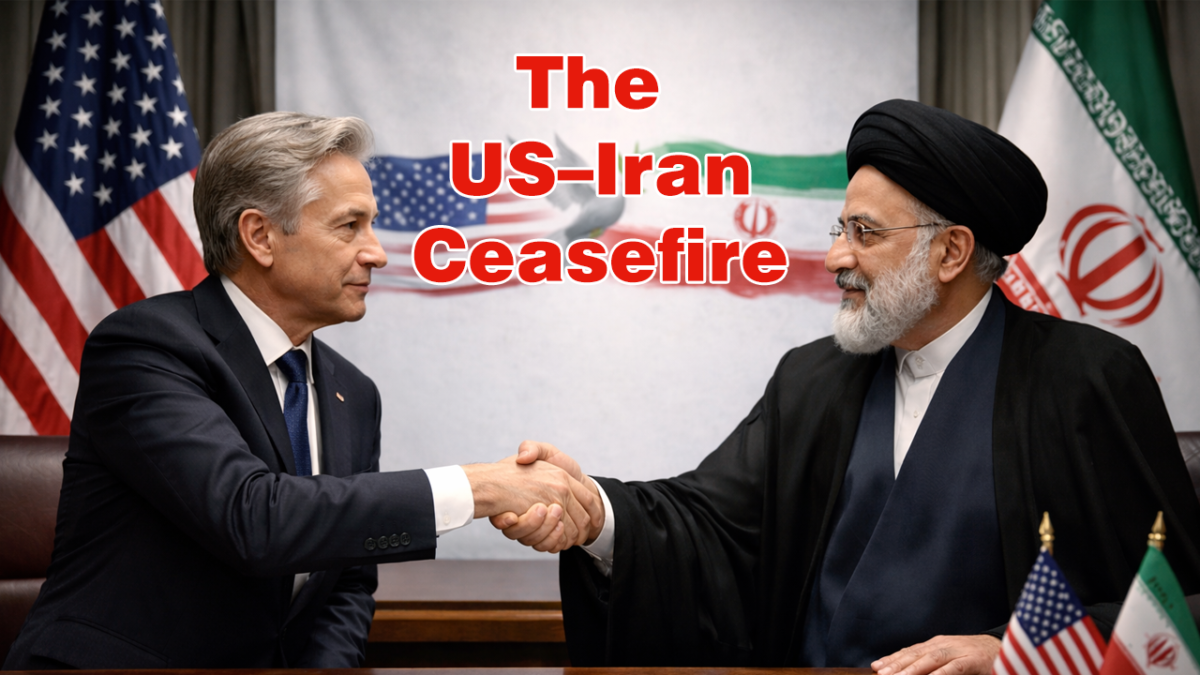
The US–Iran Ceasefire (April 2026) is not a long-term peace agreement, but rather a precarious one.
What is the ceasefire? (US–Iran Ceasefire)
Around April 8, 2026, the United States and Iran started a two-week ceasefire.
Pakistan mediated it in an attempt to halt the war’s escalation.
One crucial requirement is that Iran permit oil transportation via the Strait of Hormuz once more.
US–Iran Ceasefire , Why it’s important
The fighting had already interfered with shipping lanes and the world’s energy supplies.
The Strait of Hormuz is strategically important since it transports over 25% of the world’s oil commerce.
Global economic harm might persist even after the ceasefire.
What is the ceasefire? (US–Iran Ceasefire)
Around April 8, 2026, the United States and Iran started a two-week ceasefire.
Pakistan mediated it in an attempt to halt the war’s escalation.
One crucial requirement is that Iran permit oil transportation via the Strait of Hormuz once more.
Why it’s important (US–Iran Ceasefire)
The fighting had already interfered with shipping lanes and the world’s energy supplies.
The Strait of Hormuz is strategically important since it transports over 25% of the world’s oil commerce.
Global economic harm might persist even after the ceasefire.
Present circumstances as of right now (US–Iran Ceasefire)
There is pressure on the ceasefire.
Terms and trust issues continue to be contentious.
Discussions are still going on, although they are unclear.
Shipping is still interrupted
Traffic hasn’t returned to normal, and several oil tankers remain stalled.
Tensions in the region persist
The truce is being complicated by fighting between Israel and Hezbollah (Lebanon).
There is disagreement among some parties over whether Lebanon is covered by the ceasefire.
Important issues with the ceasefire (US–Iran Ceasefire)
Short-term (around two weeks)
No complete consensus on military or nuclear matters
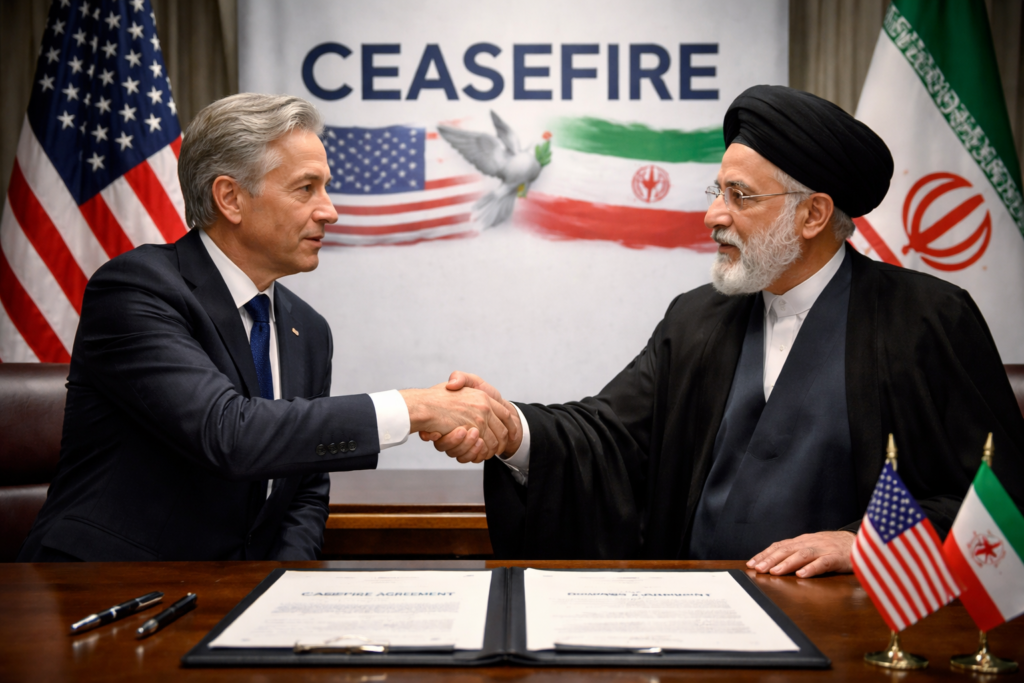
The US, Iran, and Israel have different perspectives.
Proxy wars that are still going on in the area
The ceasefire between the US and Iran is not peace, but rather a pause in hostilities. Although it lowers the immediate risk of war, it might fall apart at any point if hostilities resurface.
most realistic future scenarios
In order of likelihood to risk, these are the most plausible future possibilities following the US-Iran ceasefire in April 2026
1. (probably)
Although there is a temporary ceasefire in place, tensions are still high.
What takes place
The US and Iran are still having backchannel discussions.
Quietly, limited military operations (cyberattacks, covert operations) resume.
The Strait of Hormuz’s oil flows gradually improve.
A “cold conflict”—not a genuine war, but neither a true peace.
2. Collapse of the (US–Iran Ceasefire) ceasefire → Limited war
A trigger event causes the truce to end.
Potential causes
Oil tanker attack in the Persian Gulf
Iran-backed organizations launched a missile strike
Direct conflict with Israel
What takes place
Resuming airstrikes and naval combat
US targets military installations in Iran
Iran interferes with shipping once more
A brief but fierce battle (weeks to months), a jump in oil prices worldwide
3. The intensification of regional conflicts
The US vs. Iran conflict is not the only one.
Who participates
Iran and its proxies Against Israel
Lebanon’s Hezbollah
Saudi Arabia and other Gulf states
What takes place
War on multiple fronts (Lebanon, Syria, Gulf seas)
Large-scale missile exchanges
Damage to infrastructure and civilians increases dramatically
Global economic shock and war throughout the Middle East
4. The nuclear crisis (high risk, low chance, but serious)
if hostilities get out of control.
What takes place
Iran’s nuclear program is accelerating
Preemptive strikes are taken into consideration by the US or Israel.
Nuclear plants are targeted
Extreme escalation danger and worldwide panic (but still preventable)
5. Breakthrough agreement (ideal, but challenging)
Diplomacy is successful.
What would be needed
A new nuclear pact
Iran’s sanctions are lifted
assurances of security in the area
Long-term stability, normalization of oil markets, and a notable decrease in tensions
https://designerchoicevja.blogspot.com/
Key takeaway
70% likelihood → tense/fragile peace
20% probability → limited conflict
8–9% probability → regional escalation
A 1-2% likelihood of a nuclear crisis
Low but optimistic → a genuine peace agreement
The Strait of Hormuz is the most important thing to keep an eye on.
Peace will prevail if shipping remains open. If it is prevented, the conflict quickly intensifies.
How does Hezbollah relate to Lebanon?
Hezbollah is crucial to any US-Iranian battle since it is one of Iran’s most significant partners in the Middle East.
1. Hezbollah’s definition
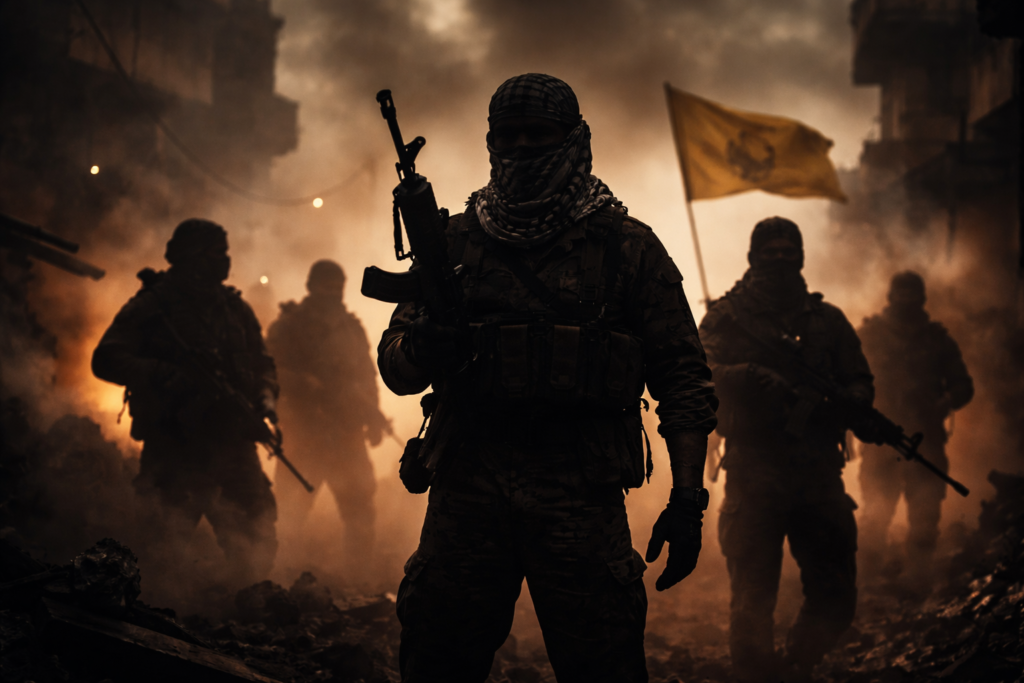
A strong political and militant organization with its headquarters in Lebanon
controls important military units, including fighters, drones, and rockets.
A component of the political system in Lebanon
Consider it both a political party and a militia.
https://rapidknowledge.in/2026/03/28/https-rapidknowledge-southern-lebanon/
2. The relationship between Iran and Hezbollah
Hezbollah is frequently referred to as Iran’s most powerful proxy.
Iran provides Hezbollah with
Finance , Weapons (drones, missiles)
Education (via the Islamic Revolutionary Guard Corps)
Iran’s motivation for doing this
To use force without going to war
To put pressure on US allies including Israel
to establish a deterrent force close to Israel’s boundaries
3. Participation in the US-Iran war
One important “backup force” for Iran is Hezbollah.
If the conflict intensifies
Israel could be attacked by Hezbollah from southern Lebanon.
Send out thousands of rockets
Launch a second front in the conflict
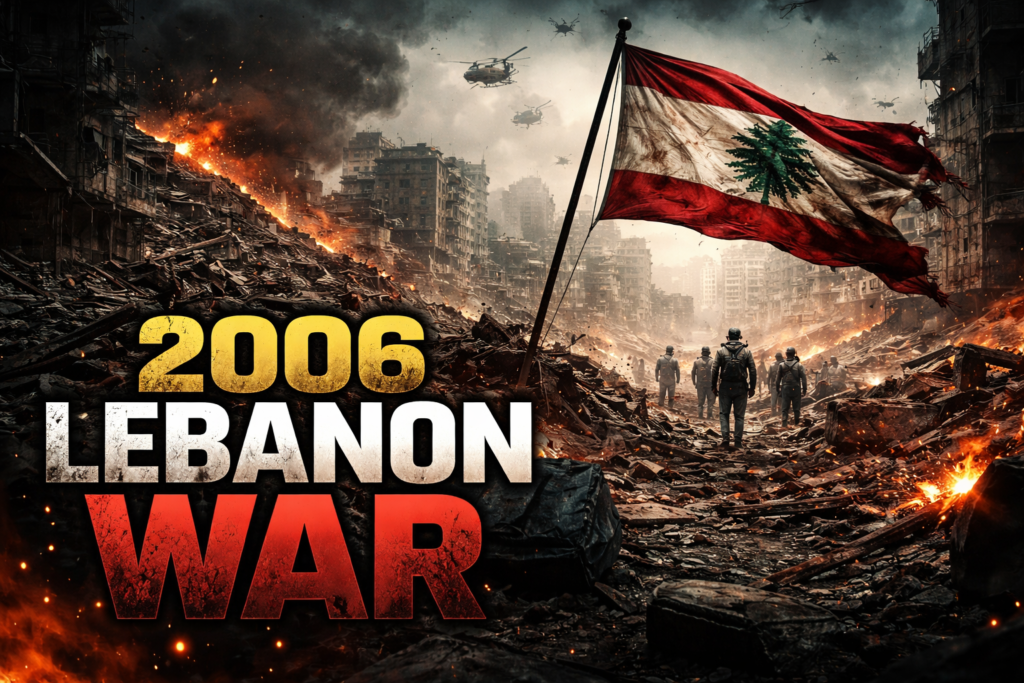
As a result, a conflict between the US and Iran becomes a regional conflict.
4. The reason for Israel’s involvement
Israel and Hezbollah have long been at odds.
In 2006, they engaged in a significant conflict in Lebanon.
Hezbollah’s missile arsenal makes it a serious danger to Israel.
5. Why this is important right now
In the present state of the ceasefire
Even if the war between the US and Iran is halted…
Hezbollah is still able to carry out indirect assaults.
The ceasefire (US–Iran Ceasefire) is brittle because of this
Hezbollah and other proxy groups could not be completely under its authority. A brief synopsis
Iran’s closest regional ally is Hezbollah.
serves as a stand-in for the US and Israel.
can intensify hostilities even if Iran stops