

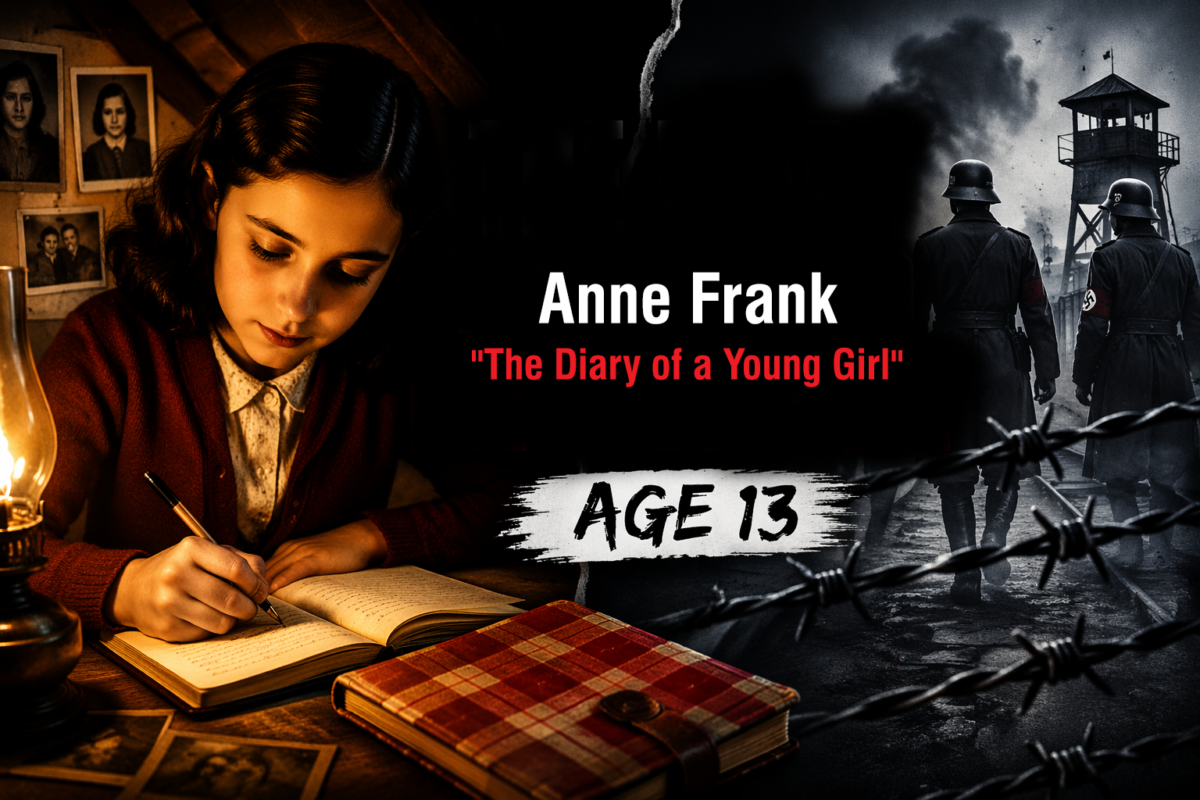
One of the most well-known Holocaust victims was a Jewish girl named Anne Frank. Her family relocated to Amsterdam to avoid Nazi persecution after she was born in Frankfurt, Germany, on June 12, 1929. When Anne was only 13 years old in 1942, her family fled to a hidden annex above her father’s workplace to avoid being taken prisoner by the Nazis.
Anne kept a journal in which she documented her thoughts, feelings, and experiences during their more than two-year period of hiding. Known as “The Diary of a Young Girl” or just “Anne Frank: The Diary of a Young Girl,” her journal became a potent and extensively read narrative of the Holocaust and the resistance of the human spirit to persecution. In addition to discussing the difficulties of life in concealment and the escalating hostilities within the annex, Anne wrote openly about her aspirations, concerns, and hopes.
When the Nazis tragically found the annex in August 1944, Anne and her family were detained and taken to concentration camps. After being moved to the Bergen-Belsen detention camp, Anne and her sister Margot perished from typhus in early 1945, just before the camp was liberated by Allied forces.
Miep Gies, one of the Dutch civilians who had assisted in hiding the family, gave Anne’s diary to Otto Frank, the only surviving member of the family, when he returned to Amsterdam following the war. Otto Frank pushed for the publication of his daughter’s diary, which has since been translated into many languages and turned into plays, movies, and other media.
One of the most read and significant accounts of the Holocaust is still Anne Frank’s diary, which offers a moving and intimate look into the life of a little child enmeshed in one of the worst eras in human history. Her words, which convey optimism, resiliency, and the enduring strength of the human spirit, continue to uplift readers everywhere.
https://designerchoicevja.blogspot.com/
“The Diary of Anne Frank”
The book “The Diary of Anne Frank,” sometimes referred to as “Anne Frank: The Diary of a Young Girl,” is written by Anne Frank, a Jewish girl who survived through the Holocaust. The journal documents Anne’s thoughts and experiences during World War II while she and her family were hiding in Amsterdam from the Nazis.

Content
The journal spans more than two years, from June 12, 1942, to August 1, 1944. In a hidden annex above her father’s office building, Anne, her family, and four other individuals lived in hiding throughout this period. Anne wrote openly about her day-to-day activities, her interactions with the other residents of the annex, her aspirations, and her thoughts on the conflict and the persecution of Jews.
Style of Writing
Writing in a vibrant and captivating way, Anne addressed her journal entries to a fictional acquaintance called “Kitty.” She put her all into her writing, sharing her frustrations, anxieties, and goals with incredible candor and wisdom.
Themes
“The Diary of Anne Frank” addresses a number of topics, such as the horrors of persecution and war, the human spirit’s tenacity, the value of optimism and hope, and the common challenges of puberty. A firsthand description of the Holocaust and its effects on people and families may also be found in Anne’s diary.
Publication
Otto Frank, Anne’s father and the only survivor of the family . It was initially published in Dutch in 1947 under the title “Het Achterhuis” (“The Secret Annex”) thanks to his efforts to get it published. Since then, it has been translated into many languages, making it one of the most read books worldwide.
Effect
Globally, “The Diary of Anne Frank” has had a significant influence on readers. It has received recognition for its timeless message of bravery, optimism, and tolerance as well as its moving depiction of the human condition. Anne’s story has been further disseminated and future generations have been motivated to remember the lessons of the Holocaust by the diary’s adaptations into plays, movies, and other media.
Reminding readers of the horrors of the Holocaust and the significance of speaking out against injustice and persecution, “The Diary of Anne Frank” is still a potent and significant literary work.