
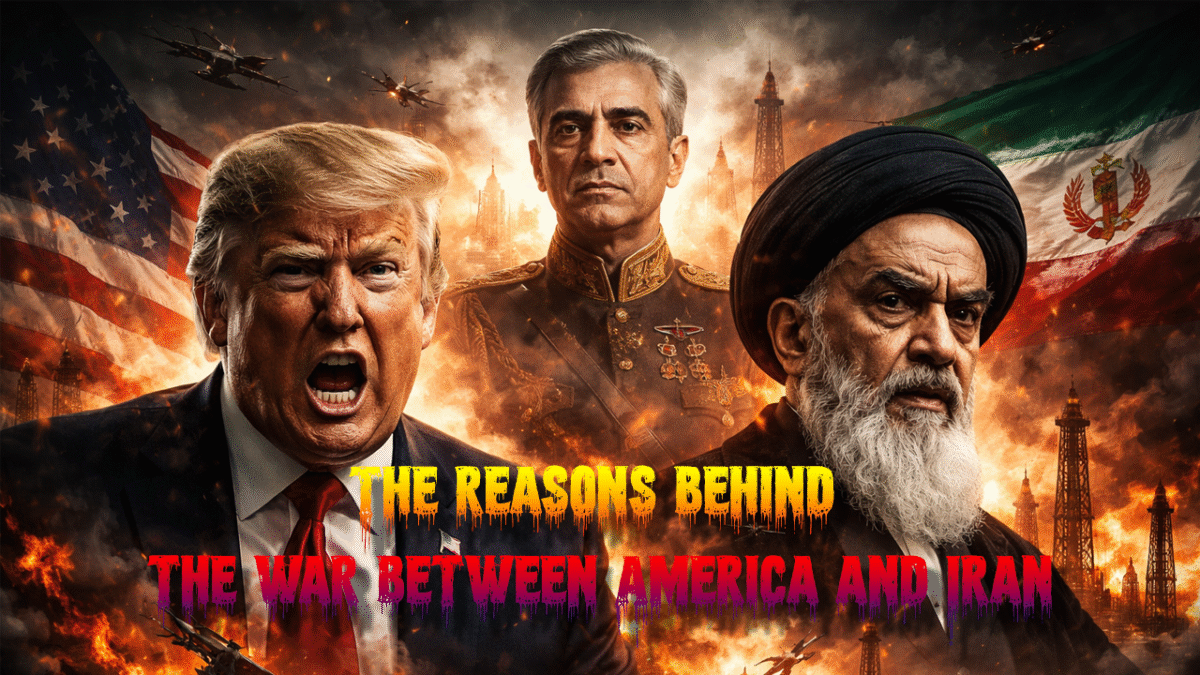
Decades of tension, mistrust, and geopolitical rivalry have led to the war between America and Iran
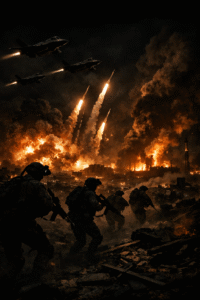
1. Historical foundations (since 1953 & 1979) the war between America and Iran
To safeguard its oil interests, the United States assisted in the overthrow of Iran’s elected government in 1953.
The U.S.-friendly Shah was overthrown by an anti-American Islamic government in 1979 as a result of the Iranian Revolution.
Relations quickly deteriorated due to the hostage situation in Iran.
Both nations have seen one another as adversaries ever since.
https://designerchoicevja.blogspot.com/
2. The problem of nuclear weapons
Iran may be attempting to develop nuclear weapons, according to the United States.
Iran claims that its program is solely focused on peaceful energy.
In an attempt to curb Iran’s development, the United States withdrew from the Joint Comprehensive Plan of Action in 2018.
One of the main causes of war in the modern world is this.
3. The Middle East’s power struggle
Iran backs organizations such as militias in Syria, Lebanon, and Iraq.
The United States backs nations like Israel and those in the Gulf.
In the area, both are vying for power and influence.
(the war between America and Iran)
4. Attacks and tensions in the military
Iran was subject to severe sanctions from the United States.
Groups supported by Iran attacked American allies.
The United States conducted strikes, like as the 2020 assassination of Iranian General Qasem Soleimani.
Both sides continued to get closer to war as a result of these measures.
(the war between America and Iran)
5. What led to the most recent conflict (2025–2026)
Negotiations on nuclear weapons failed
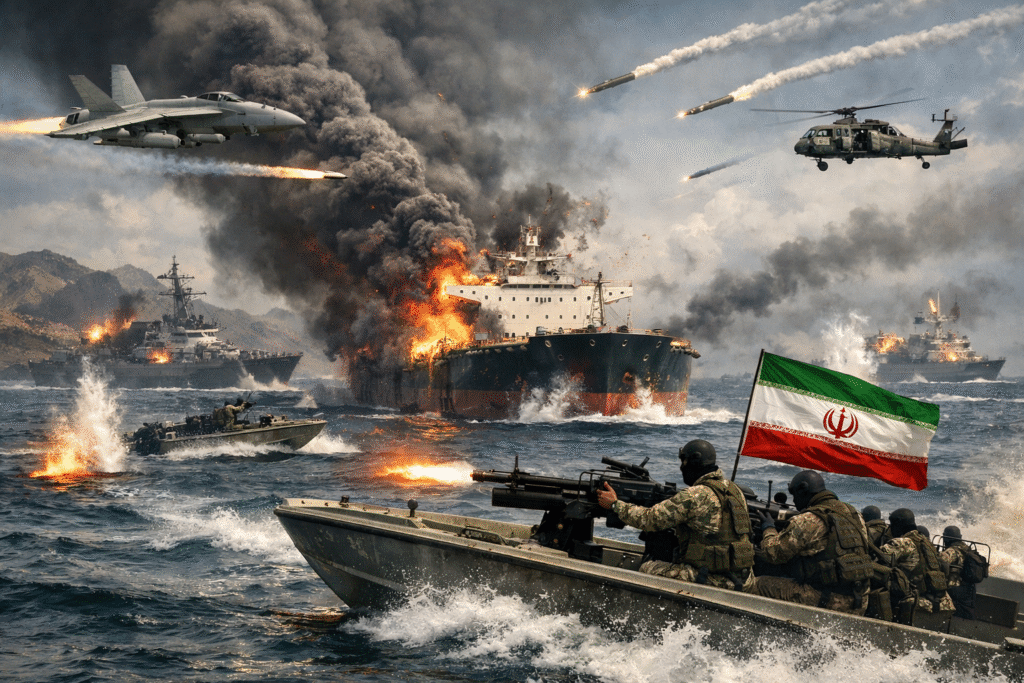
Israel and the United States conducted airstrikes against Iran’s nuclear and military facilities.
Iran threatened to restrict oil routes and retaliated with missiles.
The present war resulted from this escalation.
(the war between America and Iran)
6. The impact of oil on the world
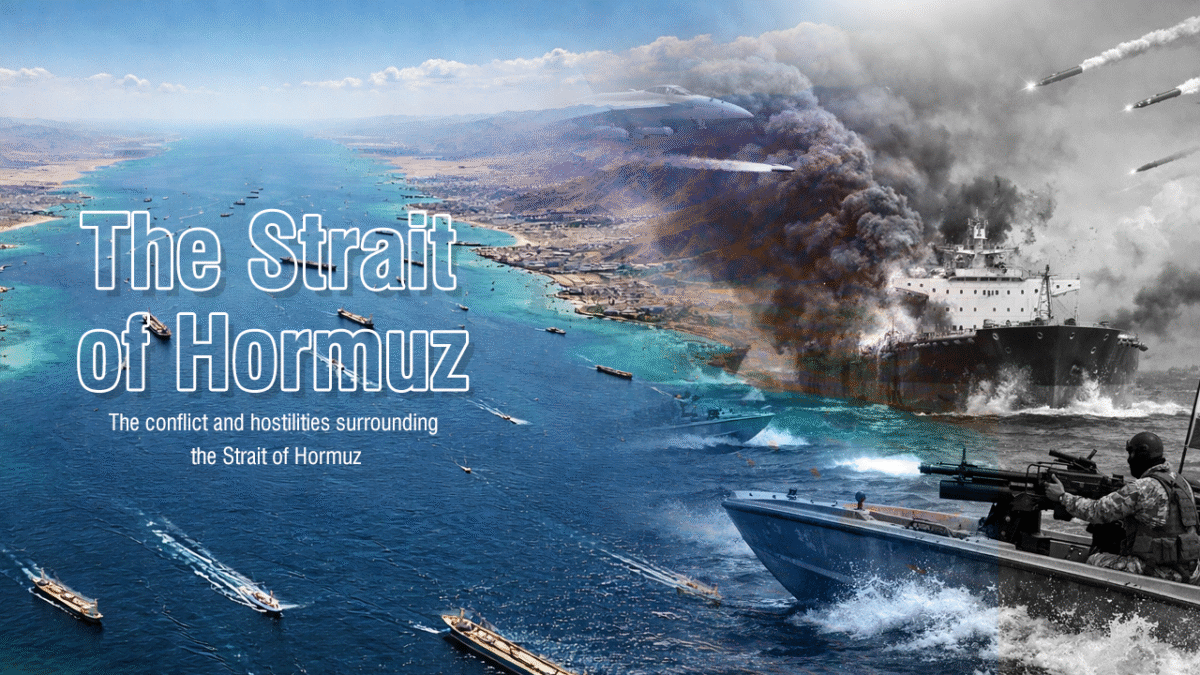
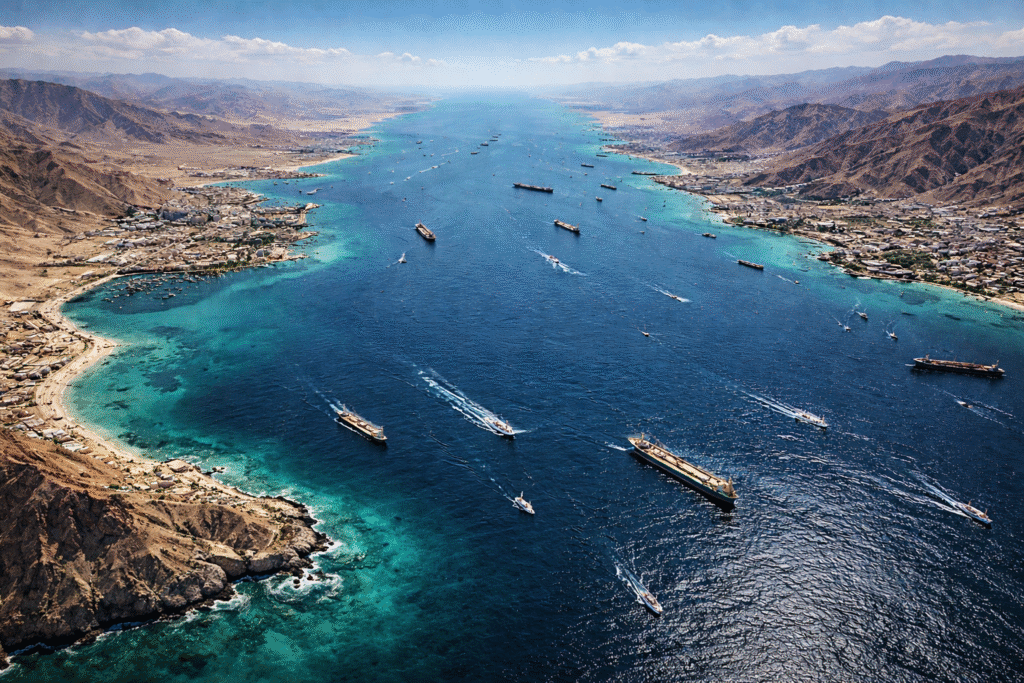
An important oil conduit, the Strait of Hormuz, can be blocked by Iran.
This has an impact on economies and oil prices worldwide.
The entire globe is worried because of this.
(the war between America and Iran)
The reasons behind the confrontation between the United States and Iran are
Anger from the past
Fears of nuclear weapons
Power rivalry in the Middle East
Sanctions and military assaults
Inadequate diplomacy
(the war between America and Iran)
Revolution in Iran
Iran’s transition from a pro-Western monarchy to an Islamic republic during the Iranian Revolution marked a significant turning point in world history.
What was the Iranian Revolution?
Millions of Iranians staged a huge uprising in 1979 to overthrow the Shah, their country’s ruler.
The Shah: Mohammad Reza Shah Pahlavi
Revolutionary leader: Ruhollah Khomeini
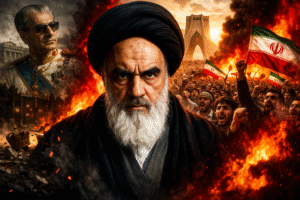
As a result, Iran was transformed into an Islamic nation governed by religious authorities.
What caused it to occur?
1. Oppression and dictatorship
The Shah exercised enormous authority.
Opposition was repressed by secret police (SAVAK).
There was no political freedom for people.
2. Inequality in the economy
Wealth from oil rose, but
Rich became richer.
The impoverished suffered
Many believed that the system was unjust.
3. Western influence, particularly American
The United States gave the Shah strong assistance.
Many Iranians thought Western concepts were taking the place of their culture and religion.
Anti-American attitude resulted from this.
4. Opposition based on religion
Clerics such as Khomeini were against
Westernization
The secular rule
They desired a Shia-based Islamic government.
Important occasions
1978: Widespread demonstrations start
January 1979: Shah leaves Iran
Khomeini returns from exile in February 1979
The monarchy falls
Iran transforms into the Islamic Republic
1. The new system
Theocracy (religious rule) is established in Iran.
The Supreme Leader has final authority.
2. The hostage situation
The US Embassy was taken over by Iranian students, and 52 Americans were kept captive for 444 days.
This ruined ties between the United States and Iran.
3. Middle East politics were altered by the global effect
Islamic movements that were inspired
caused ongoing hostility with the United States.
The Iranian Revolution took place due to
People were against the Shah’s authority.
Inequality in the economy
Anger over Western influence
Growth of religious leadership
Outcome
The Islamic Republic was established when the monarchy collapsed.
The war with the United States started