
Fundamental ideas in Chinese philosophy and cosmology, yin and yang stand for complementary and interrelated forces or principles that permeate every facet of the cosmos.
Definition
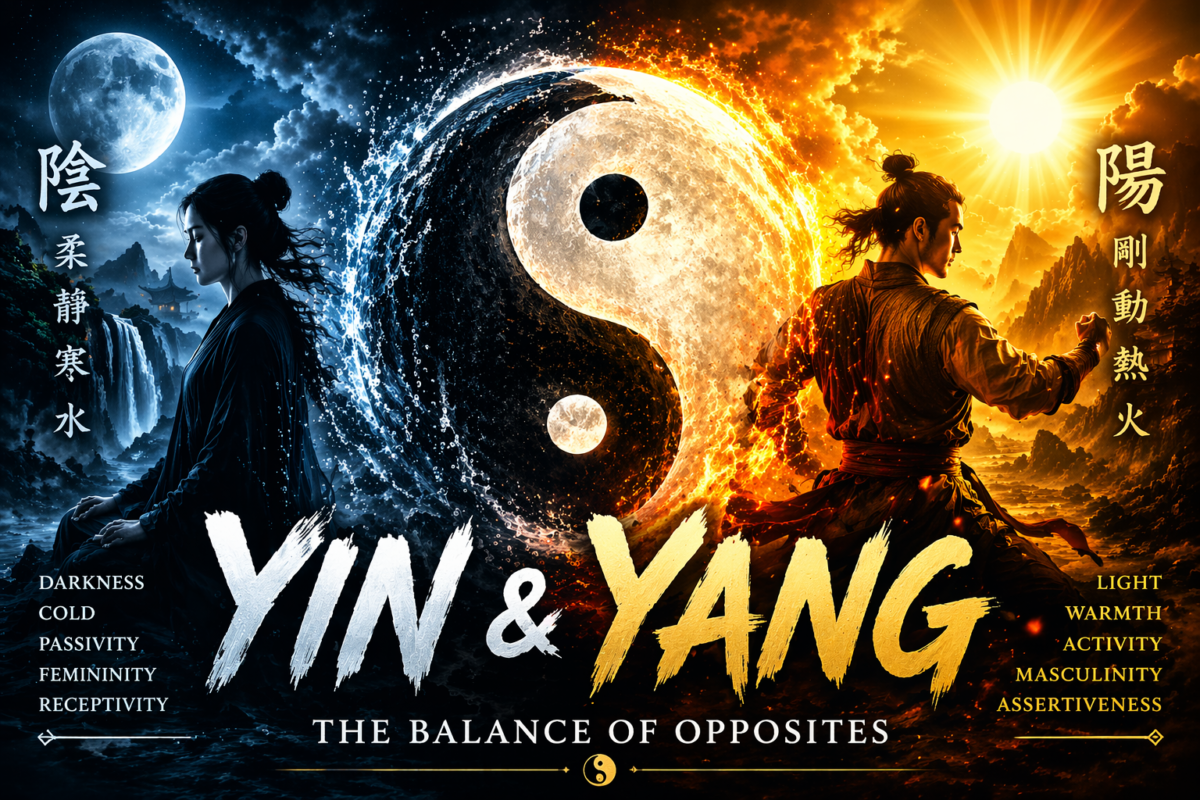
Yin and Yang are frequently portrayed as opposing but complimentary forces that are always in a state of interdependence and dynamic balance. Yang is linked to attributes like light, warmth, activity, masculinity, and assertiveness, while Yin is linked to attributes like darkness, cold, passivity, femininity, and receptivity.
Origins
Ancient Chinese philosophy is where the idea of Yin and Yang first appeared, especially in writings like the “Yijing” (Book of Changes) and the “Dao De Jing” (Classic of the Way and its Power). According to these writings, Yin and Yang’s interaction is one of the basic ideas that underpin how the universe functions.
Symbolism
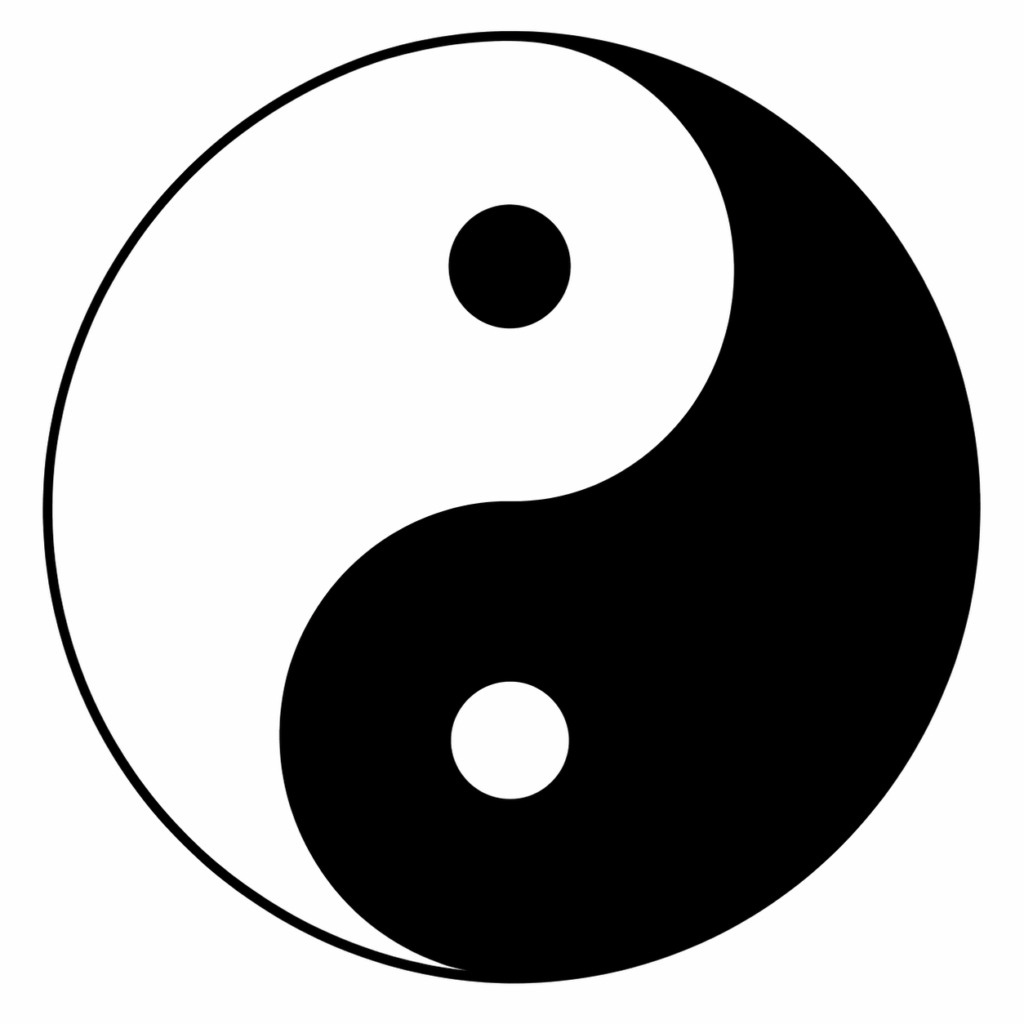
A circle divided in half by an S-shaped line, with one half colored black (Yin) and the other half white (Yang), is frequently used to symbolize Yin and Yang. The presence of Yin within Yang and Yang within Yin, signifying their interdependence and connection, is represented by a little circle of the opposing hue inside each half.
https://designerchoicevja.blogspot.com/
Interpretations
Cosmology, philosophy, medicine, martial arts, and Chinese culture are just a few of the contexts in which Yin and Yang might be understood. Yin and Yang in cosmology stand for the equilibrium and interaction of opposing forces like contraction and expansion, night and day, and winter and summer. They stand for the complementing facets of life and the dynamic character of reality in philosophy.
Theory of Five Phases
The Five Phases (Wu Xing) hypothesis, which explains the cyclical interactions between the five elemental forces—wood, fire, earth, metal, and water—is also linked to Yin and Yang in traditional Chinese medicine and cosmology. Certain characteristics and traits that align with Yin and Yang concepts are linked to each phase.
Application
The idea of Yin and Yang is used in many facets of Chinese culture and customs, such as martial arts, Feng Shui, traditional Chinese medicine, and even cooking. For instance, ailments are frequently linked to an imbalance of Yin and Yang energy, which are considered to be in balance in traditional Chinese medicine.
Contemporary Interpretations
The idea of Yin and Yang still has an impact on both Western and contemporary Chinese philosophy and culture. It frequently serves as a metaphor for the interaction of conflicting forces and the search for harmony and balance in life.
All things considered, Yin and Yang constitute an essential component of Chinese philosophy and offer a framework for comprehending the universe’s interconnection and dynamic character.
The Yin and Yang Symbol’s Significance
The concept that opposing forces in the universe are interrelated and balanced is represented by the Yin–Yang symbol (☯). In Taoism and traditional Chinese philosophy, it is an important emblem.
1. The Circle
symbolizes the cosmos or whole.
Everything is part of a single, cohesive system.
2. Black Half (Yin)
represents cold, soil, femininity, passivity, darkness, and night.
connected to inner vitality and serenity.
3. White Half (Yang)
represents warmth, light, day, activity, masculinity, and the sky.
connected to movement and external energy.
4. Small Dots
There is a black dot in the white region and a white dot in the black area.
In other words, nothing is entirely yin or entirely yang.
There is a seed of the antithesis of every force.
5. The Line That Curves
The flowing arc that connects the two sections demonstrates continuous motion and transformation.
The sign instructs that
Opposites are interdependent.
Over time, opposites transform into one another.
In both nature and life, harmony is produced by balance.
For instance
s
Winter → Summer
Rest → Activity

The Yin-Yang sign illustrates how opposing forces must be balanced for life to function, and harmony results when these forces remain in balance.
Yang can change into yin, and yin can change into yang.